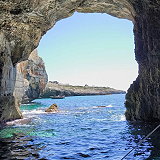
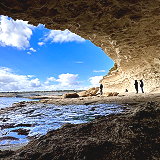
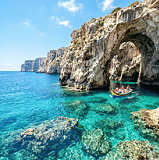
The Santa Maria cave complex comprises five caves located on Comino Island, one of Malta's islands in the Mediterranean Sea. Famous for their spectacular beauty and crystal-clear waters, visitors can reach these caves by small boat, navigating through a series of narrow entrances. The caves offer breathtaking underwater views and unique rock formations.
Ta’ Kalanka Sea Caves is a rugged, rocky coastal area on the beautiful Delimara Peninsula, near Marsaxlokk in southeastern Malta. It's known for its crystal-clear waters and natural rock formations, and is often visited by swimmers. Despite its name, it's part of a rugged coastline rather than a developed beach; therefore, be prepared for few or no amenities nearby.
Comino is a small island located between Malta and Gozo in the Mediterranean Sea. It is part of the Maltese archipelago. Despite its small size, Comino is renowned for its stunning beaches and crystal-clear waters, making it a popular tourist destination. Despite its popularity with tourists, Comino retains its unspoiled beauty, with no permanent residents and limited development.
Ggantija is a Neolithic temple complex located on the Mediterranean island of Malta. It is one of the oldest freestanding structures in the world, with the oldest parts of the temple dating back to around 3600 BC. The complex comprises two temples, constructed from massive blocks of stone – each weighing several tons. The Ggantija temples are a fascinating example of early human civilization.
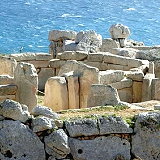
The Hagar Qim Temple is one of the most important prehistoric sites in Malta, renowned for its impressive megalithic structures. Dating back to approximately 3600-3200 BC, it is older than both Stonehenge and the Giza Pyramids. It is part of the Maltese megalithic temple complex, showcasing the advanced construction skills and cultural practices of the Neolithic inhabitants of the Maltese archipelago.
The Northern Region is one of Malta's six regions. It encompasses the northwestern part of the main island of Malta. The region had a population of 118,588 in 2020. Its capital is St. Paul's Bay. The region boasts white sandy beaches, ferries to Gozo, boats to Comino, and a large number of family-friendly holiday accommodations on the island.
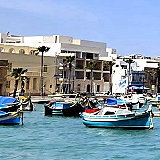
The Ports Region is one of six regions of Malta. It is located in the southeast of the main island of Malta. In 2020, the region had a population of 69,880. The main seaport in Malta is Valletta Port.
The Mnajdra Archaeological Park is part of the Maltese prehistoric temple complex near Qrendi, in the southwest of the island. It shares an archaeological park with Ħaġar Qim. Mnajdra is a megalithic temple complex dating from the late Neolithic period, over 5,000 years old. It is one of Malta's most important prehistoric sites and is famous for its temple layout and sun-facing arrangement.
The Southern Region is one of six regions of the main island of Malta. It encompasses the southeastern part of the main island of Malta and comprises 12 local councils. The region's population was 106,593 in 2021. Qormi is the administrative center of the Southern Region.
The Eastern Region is one of Malta's six regions. Located in the northeast of the main island of Malta, the Eastern Region is Malta's vibrant coastal center, renowned for its historical defensive structures. Its population was 115,908 in 2021.
The Blue Grotto is the collective name for a group of sea caves located on the southeastern coast of Malta, a short distance from the fishing port of Wied iż-Żurrieq. Wied iz-Żurrieq, the Blue Grotto, and the surrounding caves are all within the village of Qrendi. It is famous for its shimmering turquoise waters and a 30-meter-high natural rock arch.
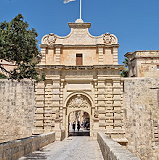
The Mdina Gate is the main gateway to the fortified city of Mdina, Malta. Passing through the Mdina Gate, visitors are transported to a medieval world, where narrow streets and timeless architecture reveal the enduring beauty of this well-preserved fortress city.
The Western Region is one of the six regions of Malta. It is located in the southwest of the main island of Malta. As of 2021, the Western Region had a population of 65,266. Despite being one of the largest regions by land area, it is the least populated region on the main island.
Originally built as a war machine, St. Elmo Fortress was strategically located at the tip of the Sceberras Peninsula to counter and contain the power of the Ottoman fleet. With unobstructed panoramic views of the surrounding harbors and towns, this key position was recognized and exploited from the Middle Ages onwards.
The Blue Hole, located next to the famous collapsed Azure Window in Dwejra, on the west coast of Gozo, is known as one of the ten most beautiful diving spots in Europe. The Blue Hole resembles a cave, but the underwater scenery and the light shining through create a magnificent spectacle.
The Ġgantija Archaeological Park complex is a unique prehistoric site located in the heart of a distinctive archaeological landscape, the Xagħra plateau on the island of Gozo. It comprises two structures built between 3600 and 3200 BC.
Located close to the Grand Master’s Palace on Valletta’s main street. Five minutes’ walk from the Valletta Bus Terminus. Casa Rocca Piccola is still privately owned and is a much loved family palace which contains over 50 rooms, many of which are open for viewing.
Gozo is one of the three main islands of Malta, a small archipelago located in the Mediterranean Sea. It is situated to the northwest of the main island of Malta. Gozo is the second-largest island in the Maltese archipelago, after the main island of Malta. It has an area of around 67 square kilometers (26 square miles) and had a population of 31,232 residents in 2021.
Valletta is the capital city of Malta, a small island nation located in the Mediterranean Sea. Known for its rich history, stunning architecture, and strategic location, Valletta is a UNESCO World Heritage Site and a popular destination for tourists. Its population was 5,827 in 2019.
Malta is a small island country located in the Mediterranean Sea, south of Italy and east of Tunisia. It is one of the world's smallest and most densely populated countries, with an area of just 316 square kilometers and a population of around 514,000 people.