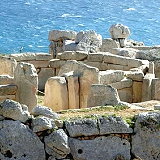
The Hagar Qim Temple is one of the most important prehistoric sites in Malta, renowned for its impressive megalithic structures. Dating back to approximately 3600-3200 BC, it is older than both Stonehenge and the Giza Pyramids. It is part of the Maltese megalithic temple complex, showcasing the advanced construction skills and cultural practices of the Neolithic inhabitants of the Maltese archipelago.
The Mnajdra Archaeological Park is part of the Maltese prehistoric temple complex near Qrendi, in the southwest of the island. It shares an archaeological park with Ħaġar Qim. Mnajdra is a megalithic temple complex dating from the late Neolithic period, over 5,000 years old. It is one of Malta's most important prehistoric sites and is famous for its temple layout and sun-facing arrangement.
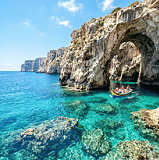
The Blue Grotto is the collective name for a group of sea caves located on the southeastern coast of Malta, a short distance from the fishing port of Wied iż-Żurrieq. Wied iz-Żurrieq, the Blue Grotto, and the surrounding caves are all within the village of Qrendi. It is famous for its shimmering turquoise waters and a 30-meter-high natural rock arch.
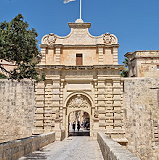
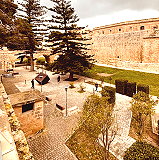
The Mdina Gate is the main gateway to the fortified city of Mdina, Malta. Passing through the Mdina Gate, visitors are transported to a medieval world, where narrow streets and timeless architecture reveal the enduring beauty of this well-preserved fortress city.
The Western Region is one of the six regions of Malta. It is located in the southwest of the main island of Malta. As of 2021, the Western Region had a population of 65,266. Despite being one of the largest regions by land area, it is the least populated region on the main island.