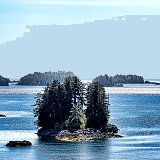
The Alexander Islands are a 480-kilometer-long archipelago in North America, located off the southeastern coast of Alaska. The archipelago comprises approximately 1,100 islands and forms a large part of the Alaska Peninsula, running parallel to the mainland's coastal mountain range. The islands are covered in temperate rainforest, primarily consisting of Western spruce and Sitka spruce trees.
Measuring 140 miles in length and covering over 2,230 square miles, Prince of Wales Island is one of the Alexander Islands in the Alaskan Panhandle. It is the fourth largest island in the United States (after Hawaii, Kodiak, and Puerto Rico). It is a vast, rugged island home to eleven small communities. Its population is 5,559 people.
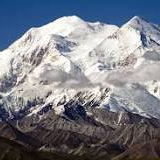
Mount McKinley, also known as Denali, is the highest peak in North America, with an elevation of 20,310 feet (6,190 meters). It is located in the Alaska Range in south-central Alaska and is part of Denali National Park and Preserve.
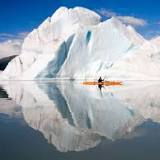
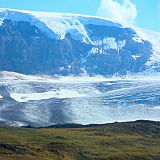
Kenai Fjords National Park is a national park located near Seward, Alaska, on the Kenai Peninsula. The park covers an area of over 669,000 acres (271,000 hectares) and includes the Harding Icefield, a massive ice sheet covering over 700 square miles (1,800 square kilometers).
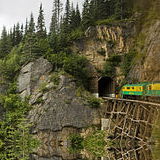
The White Pass and Yukon Route is a narrow gauge railway that runs from Skagway, Alaska, to Carcross, Yukon Territory, Canada. The railway was originally built in 1898 during the Klondike Gold Rush and was used to transport prospectors and supplies to the gold fields.
Denali State Park is an integral part of one of North America's most spectacularly beautiful regions. The park's 325,240 acres, almost one-half the size of Rhode Island, provide the visitor with a great variety of recreational opportunities, ranging from roadside camping to wilderness exploration.
Icy Strait Point is a privately owned tourist destination just outside the small village of Hoonah, Alaska. It is located on Chichagof Island and is named after the nearby Icy Strait.
Wrangell-St. Elias National Park and Preserve is the largest national park in the United States, situated in southeastern Alaska. It is known for its vast wilderness, rugged mountain ranges, glaciers, and diverse ecosystems.
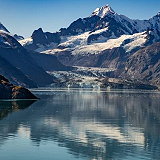
Glacier Bay National Park and Preserve is a stunning wilderness located in southeastern Alaska, part of the larger Tongass National Forest. Known for its dramatic landscapes of towering glaciers, snow-capped mountains, deep fjords, and temperate rainforests, it offers a glimpse into a dynamic natural world shaped by ice and water.
The Great Kobuk Sand Dunes are a vast expanse of sand dunes located in Kobuk Valley National Park, Alaska. They are the largest active sand dunes in Arctic North America, covering an area of about 25 square miles. The dunes rise as high as 100 feet (30 meters) above the surrounding boreal forest, creating a surreal contrast between the desert-like landscape and the Arctic environment.
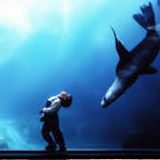
The Alaska SeaLife Center is a non-profit marine science facility located in Seward, Alaska. It is dedicated to understanding and promoting the understanding and conservation of the marine ecosystem of Alaska.
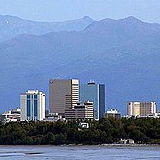
Alaska is a state in the United States, located in the northwest extremity of North America. It is the largest state in the United States by area, covering over 663,000 square miles (1.7 million square kilometers). The state has a population of about 730,000 people, making it one of the least densely populated states in the US.
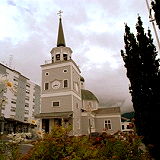
St. Michael's Cathedral, also known as the Cathedral of St. Michael the Archangel, is a cathedral of the Orthodox Church in America Diocese of Alaska. It was constructed between 1844 and 1848.