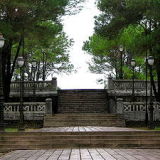
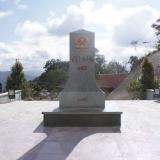
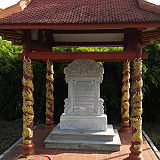
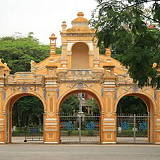
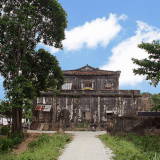
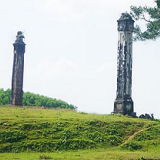
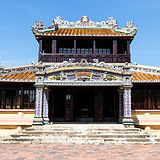
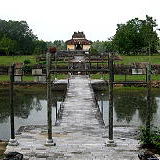
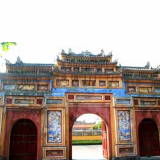
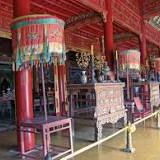
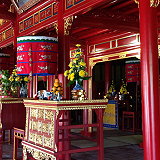
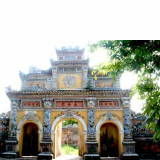
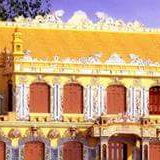
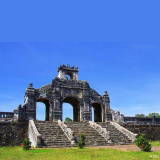
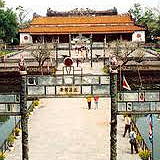
Nam Giao Esplanade (Đàn Nam Giao) - The three-terraced heaven and earth esplanade - was constructed in 1806 where the Nguyen emperors held heaven and earth ceremonies in the spring every three years for the welfare of the country and the stability of the dynasty.
Nguyễn Tri Phương is a famous historical figure in Vietnamese history. He was an outstanding strategist and military leader in the 19th century, especially during Vietnam's resistance against the French. Nguyen Tri Phuong was born in 1830 in Hue, the capital of Vietnam during the Nguyen Dynasty.
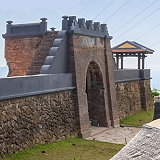
Hải Vân Quan is a historic military fortress located at the summit of Hải Vân Pass, on the border between Huế City and Đà Nẵng City. Built in 1826 under the reign of Emperor Minh Mạng of the Nguyễn Dynasty, it served as a strategic defensive structure to protect the imperial capital of Huế and control movement between the northern and central regions of Vietnam.
Imperial Academy, Huế (Quốc Tử Giám), located in the former imperial capital of Hue, was the national academy under the Nguyen dynasty in Vietnam. The Royal Academy is the first and only surviving feudal university in the country.
Following Le Van Khoi's defeat in the South, Emperor Minh Mang established a specialized agency to manage secret matters, especially military affairs. The Emperor modeled the intelligence agencies of the Song Dynasty and the military intelligence of the Qing Dynasty to create the national intelligence agency – Tam Tòa or Viện Cơ Mật – to manage confidential matters.
Tàng Thư lâu (The National Library of the Nguyen Dynasty) is a building constructed on Hoc Hai Lake in Hue in 1825, used to store old administrative documents of the offices and six ministries of the Nguyen Dynasty. It can be considered the archive of Vietnam during the Nguyen Dynasty, preserving rare documents related to the activities of the court and the changes in the country.
Điện Gia Thành, also known as Lăng Thuận Thiên Cao Hoàng Hậu, is a historical site located in Hue, Vietnam. It is the royal tomb of Empress Dowager Tu Du, mother of Emperor Thieu Tri of the Nguyen Dynasty. Empress Thuan Thien (1762-1814), whose birth name was Tong Phuc Thi Lan, was the first wife of Nguyen Phuc Anh (the future Emperor Gia Long) and the mother of Crown Prince Nguyen Phuc Canh.
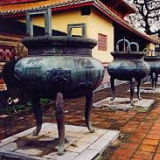
Cửu Đỉnh (Nine Tripod Cauldrons) are an important set of bronze vessels from the Nguyen Dynasty in Vietnam. The set was commissioned by Emperor Minh Mang in 1835 in Hue, the then capital of Vietnam. Each vessel is engraved with various motifs and inscriptions, including the names of the regions and provinces that contributed to its creation.
Thái Bình lâu (Thai Binh Pavilion) is a historical monument located northeast of the Forbidden City, within the Hue Citadel. It is a traditional Vietnamese-style pavilion built in the early 19th century during the reign of Emperor Gia Long. The pavilion served as a resting place and reading spot for the emperor.
Princess Huyền Trần was a notable historical figure in Vietnam. She was a princess during the Trần Dynasty, which ruled Vietnam from the 13th to the 14th century. Known for her intelligence and virtue, Princess Huyền Trần was the daughter of Emperor Trần Nhân Tông, one of Vietnam’s most revered emperors, and she was also the sister of Emperor Trần Anh Tông.
Emperor Thiệu Trị, son of Minh Mang, reigned for only seven years and did not have the opportunity to build his own mausoleum during his lifetime. After his death, his remains were temporarily kept at Long An Temple, which the Emperor himself had built in 1845. His son, Tu Duc, built this permanent mausoleum in 1848.
Cung Diên Thọ (Dien Tho Palace) is a historical monument located in Hue, the former capital of Vietnam. The palace was built in 1848 by Emperor Thieu Tri of the Nguyen Dynasty as a residence for his mother, Empress Dowager Tu Du. The palace is a testament to Vietnam's rich cultural heritage and the impact of war on the country's history.
Thế Tổ miếu is a historical site dedicated to the worship of the emperors and concubines of the Nguyễn dynasty. Construction of the Thế Tổ Temple began during the reign of Emperor Minh Mạng in 1821 and was completed in 1824. The temple complex covers an area of over 5000 square meters and features various architectural styles, including traditional Vietnamese, Chinese, and European elements.
Triệu Tổ miếu is a place of worship dedicated to the ancestors of the founder, located in Hue City, Vietnam. Built in the early 19th century during the Nguyen Dynasty, the temple is dedicated to the ancestral worship of the Nguyen family. Trieu To Temple is a must-see attraction for anyone interested in Vietnamese history, culture, and architecture.
Within the Hue Citadel complex, Cung Trường Sanh (Truong Sanh Palace), built to the northwest of the citadel, was originally a flower garden where the Nguyen dynasty invited the empresses and their families to visit and admire the scenery. Later, it was converted into a place for the empress dowagers to eat and live.
Điện Kiến Trung (Kiến Trung Palace) is a historical palace located in Hue City, Vietnam. Built in the early 19th century during the Nguyen Dynasty, it was once the residence of Empress Dowager Tu Du, mother of Emperor Minh Mang. Today, visitors can explore the palace's elaborately decorated halls and beautiful gardens, learning about the history and culture of ancient Vietnamese royalty.
Lăng Thoại Thánh is the tomb of the mother of emperor Gia Long. This is the mausoleum of Queen Hung To Hieu Khuong (1738-1811), the second wife of Nguyen Phuc Con (Luan) and the mother of King Gia Long. Her sure name is Nguyen Thi Hoa n.
Van Mieu Hue, also known as the Temple of Literature in Hue, is a historical site located in Thua Thien Hue, Vietnam. Van Mieu Hue is not only a significant historical and cultural site but also a place that highlights the importance of education and learning in Vietnamese society. It offers visitors a glimpse into Vietnam's imperial past and provides an opportunity to appreciate the beauty of traditional Vietnamese architecture.
Điện Thái Hòa, also known as the Palace of Supreme Harmony, is a significant historical attraction located within the Imperial City in Hue, Vietnam. It was constructed during the Nguyen Dynasty in the early 1800s and served as the main ceremonial hall for important events such as the emperor's coronation and major court ceremonies.