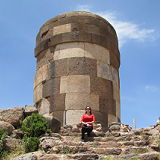
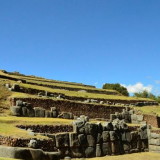
Sillustani is a pre-Inca cemetery located on the shores of Lake Umayo near Puno in Peru. The tombs, built above ground in tower-like structures called chullpas, are the remains of the Qulla people, an Aymara tribe conquered by the Inca Empire in the 15th century.
Tarawasi, also known as Tarahuasi, is an archaeological complex in Peru. Located in the Cusco region, Anta province, Limatambo district, approximately 72-80 km from the city of Cusco, it is one of the finest examples of Inca stone construction. It is characterized by its precise polygonal stonework, where the stones fit together perfectly without any binding material.
Site Museum, Av. Chan Chan 101 Urb, Trujillo 13000, Peru
221 views 💖 1
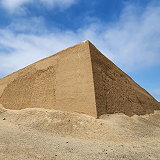
Chan Chan was once the capital of the Chimor kingdom. It was the largest pre-Columbian city in South America. Today, it is an archaeological site located in La Libertad province, 5 km west of Trujillo, Peru.
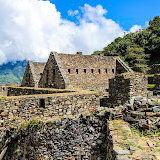
Choquequirao is a 16th-century Inca site in the Cusco region of southern Peru. Often referred to as the "sister city" of Machu Picchu due to its similar structure and architecture, the site comprises a vast complex of buildings and terraces built around Sunch'u Pata, a truncated hilltop on a steep slope overlooking the Apurímac River.
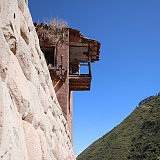
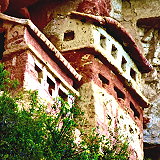
Revash, near the village of San Bartolo, 60 km south of Chachapoyas city, is a late Chachapoya funerary architectural complex with chullpas (tombs) built on high limestone cliffs, at an altitude of 2,800 m above sea level. They are located within the Cerro Carbón limestone formation, situated on the left edge of the Alto Utcubamba valley.
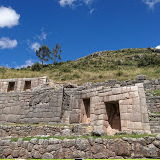
The Temple of the Three Windows, also known as the Cosmic Windows, is truly miraculous, a structure built perfectly and enduring forever. It is one of the most beautiful places to visit, and also a very important location due to its proximity to the main square.
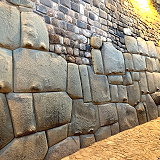
The twelve-angled stone is an archeological artifact in Cusco, Peru. The impressive architecture of the ancient Inca civilization continues to amaze scholars around the world today. One of the mysterious wonders forgotten over time is the ruins of a structure called Hatun Rumiyoc. They built it using massive polygonal stone blocks, carving and fitting them with extraordinary precision.
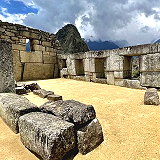
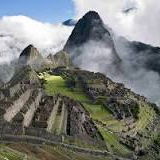
Machu Picchu stands 2,430 m above sea-level, in the middle of a tropical mountain forest. It was probably the most amazing urban creation of the Inca Empire at its height; its giant walls, terraces and ramps seem as if they have been cut naturally in the continuous rock escarpments.
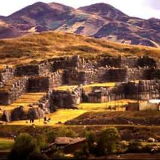
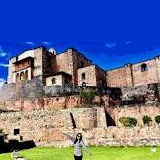
Sacsayhuaman is a walled complex near the old city of Cusco. Sacsayhuaman is at an altitude of 3,701 m. or 12,000 feet. The site is part of the City of Cuzco, which was added to the UNESCO World Heritage List in 1983.
Tambomachay is an archaeological site located about 7 km from the city of Cusco in Peru. It is believed to have been a site of religious importance during the Inca Empire, and it consists of a series of aqueducts, canals, and waterfalls that are still functional today.
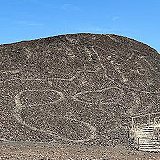
The Nazca lines are a group of over 700 geoglyphs made in the soil of the Nazca Desert in southern Peru. They were created between 500 BC and 500 AD by people making depressions or shallow incisions in the desert floor, removing pebbles and leaving different-colored dirt exposed. The Nazca Lines were slowly revealed, piece by piece, as technology and curiosity caught up with what the desert had been quietly holding for centuries.
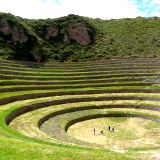
Moray or Muray is an archaeological site in Peru. One of the most visually stunning Inca ruins is at Moray, an archaeological site in Peru approximately 50 km northwest of Cuzco and just west of the village of Maras.