Bao Vinh Old Town is a historic town located in the Hoa Chau ward of Hue city, Vietnam. The town is situated along the banks of the Perfume River and has a rich history dating back to the Nguyen Dynasty.
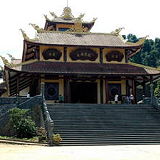
Thiền viện Trúc Lâm Bạch Mã Is a Zen Buddhist monastery located in Loc An, Hue, Vietnam. The temple is the first monastery in the central of Vietnam. It is located at Bach Ma mountain. Bach Ma Monastery separates the world by truoi river, the only access to the monastery is by a ferry of ferry-boat.
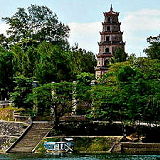
Chùa Thiên Mụ, also known as the Pagoda of the Celestial Lady, is a famous Buddhist temple located in Huong Hoa, Thua Thien Hue province, Vietnam. It is situated on the banks of the Perfume River and is one of the iconic landmarks of the city of Hue. Chua Thien Mu was built in 1601 and is one of the oldest and well-known religious buildings in the country.
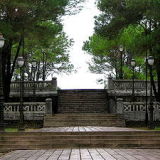
Nam Giao Esplanade (Đàn Nam Giao) - The three-terraced heaven and earth esplanade - was constructed in 1806 where the Nguyen emperors held heaven and earth ceremonies in the spring every three years for the welfare of the country and the stability of the dynasty.
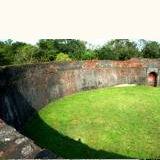
Hổ Quyền (Tiger Arena) was a place where tigers and elephants fought to the death in the style of Roman gladiatorial combat, to entertain the royal family and high-ranking guests. The Tiger Arena was built in 1830 along the southern bank of the Perfume River, about 200 meters from Long Chau Temple, where the royal war elephants were worshipped and buried.
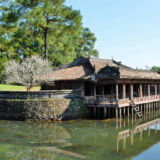
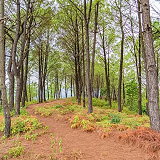
Emperor Tự Đức’s tomb is located in a narrow valley in Duong Xuan Thuong village (currently Thuong Ba village, Thuy Xuan Commune, Hue City). It is one of the most beautiful works of royal architecture of the Nguyen dynasty. The tomb lies in a boundless pine forest, 8 km from Hue. Its construction started in December 1864 and finished in 1867.
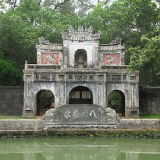
The Mausoleum of Emperor Gia Long (Lăng Hoàng đế Gia Long) is located 16km from the centre of Hue, on top of the Thien Tho mountain, on the west bank of the Huong river. Construction of the tomb began in 1814 and was completed in 1820.
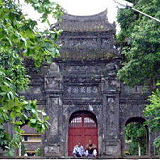
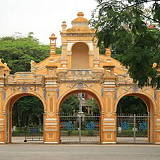
Bảo Quốc Pagoda (Chùa Bảo Quốc) is located on a small hill called Ham Long. There is a spring from the top of the hill that flows down into the grounds of the temple. The temple campus is about 8,000 square meters with an ancient gate.
Duong Xuan Thuong III village, Thủy Xuân, Huế, Thành phố Huế
535 views 💖 5 👍 0
Chùa Từ Hiếu was originally a small hut built in 1843, who was formerly recognized by royal authority as the monk of Giac Hoang Pagoda. In 1848, the pagoda was restored by monk Cung Ky with the help of the king's eunuchs and courtiers. Tu Hieu hence became a large pagoda.
Following Le Van Khoi's defeat in the South, Emperor Minh Mang established a specialized agency to manage secret matters, especially military affairs. The Emperor modeled the intelligence agencies of the Song Dynasty and the military intelligence of the Qing Dynasty to create the national intelligence agency – Tam Tòa or Viện Cơ Mật – to manage confidential matters.
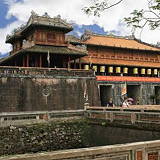
The Hue Citadel Gate (Ngọ Môn) in Hue, Vietnam, is the main gateway to Hue City, a UNESCO World Heritage site and the former capital of Vietnam under the Nguyen Dynasty. The gate is one of the most iconic architectural landmarks in Hue City and serves as the entrance to the Forbidden City, a space reserved exclusively for the emperor, his family, and his concubines.
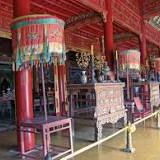
Hue Museum of Royal Antiquities (Bảo Tàng Mỹ Thuật Cung Đình Huế) is located in Phu Hau, Thua Thien Hue, Vietnam. It is a museum dedicated to preserving and showcasing the rich art and cultural heritage of the former Imperial City of Hue. The museum is housed within the Long An Palace, which was once a residence of royal family members during the Nguyen Dynasty.
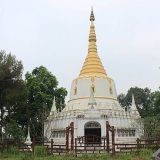
Chùa Thiền Lâm - Theravada or chua Phat Dung - Phat nam, located in the Thuy Xuan, Hue, Vietnam, is a Zen Buddhist temple known for its peaceful ambiance and beautiful natural surroundings. Its beautiful setting and focus on meditation and mindfulness make it a place of spiritual retreat and self-reflection.
Phá Tam Giang, also known as Tam Giang Lagoon, is a large lagoon located in Hue City, Vietnam. It is the largest lagoon in Southeast Asia, spanning an area of approximately 22,000 hectares. The lagoon was formed by the confluence of three rivers: O Luc, Huong, and Bo. Tam Giang Lagoon is renowned for its spectacular natural scenery, with tranquil waters, lush mangrove forests, and picturesque fishing villages.
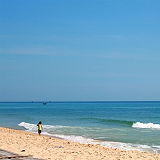
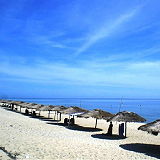
Bãi biển Thuận An is a beautiful beach located in Hue city of Vietnam. It is situated along the central coastline of the country, approximately 13 kilometers east of Hue City. Thuan An Beach is known for its natural beauty, calm waters, and sandy shores. Best time to visit is summer time, from April to September.
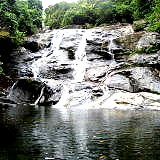
Thác Nhị Hồ Huế is a waterfall located in Loc Tri, Phu Loc district, Thua Thien Hue province, which is in the central region of Vietnam. It is nestled within the lush natural landscape of the area. Thac Nhi Ho offers a serene and beautiful natural setting for visitors to enjoy in Thua Thien Hue province. It provides an opportunity to immerse oneself in the tranquility of nature and appreciate the scenic wonders of Vietnam.
Cảnh Dương Beach is located in Lộc Vinh, Huế, Vietnam. It is approximately 60 km south of Huế city and lies on the road from Huế to Đà Nẵng. The beach is renowned for its picturesque scenery, with fine white sand, clear blue water, and fresh air. This destination promises to offer visitors an exciting experience, showcasing the natural beauty and cultural heritage of Vietnam.
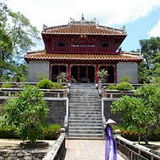
Thế Tổ miếu is a historical site dedicated to the worship of the emperors and concubines of the Nguyễn dynasty. Construction of the Thế Tổ Temple began during the reign of Emperor Minh Mạng in 1821 and was completed in 1824. The temple complex covers an area of over 5000 square meters and features various architectural styles, including traditional Vietnamese, Chinese, and European elements.
Núi Ngự Bình is a prominent mountain in Huế, Vietnam, standing 105 meters tall and located about 4 km from the city center. Its flat summit and symmetrical shape resemble a screen, making it a significant natural landmark alongside the Perfume River.
Princess Huyền Trần was a notable historical figure in Vietnam. She was a princess during the Trần Dynasty, which ruled Vietnam from the 13th to the 14th century. Known for her intelligence and virtue, Princess Huyền Trần was the daughter of Emperor Trần Nhân Tông, one of Vietnam’s most revered emperors, and she was also the sister of Emperor Trần Anh Tông.