Bao Vinh Old Town is a historic town located in the Hoa Chau ward of Hue city, Vietnam. The town is situated along the banks of the Perfume River and has a rich history dating back to the Nguyen Dynasty.
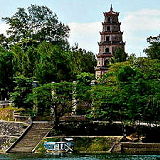
Chùa Thiên Mụ, also known as the Pagoda of the Celestial Lady, is a famous Buddhist temple located in Huong Hoa, Thua Thien Hue province, Vietnam. It is situated on the banks of the Perfume River and is one of the iconic landmarks of the city of Hue. Chua Thien Mu was built in 1601 and is one of the oldest and well-known religious buildings in the country.
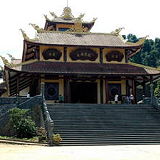
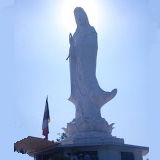
Thiền viện Trúc Lâm Bạch Mã Is a Zen Buddhist monastery located in Loc An, Hue, Vietnam. The temple is the first monastery in the central of Vietnam. It is located at Bach Ma mountain. Bach Ma Monastery separates the world by truoi river, the only access to the monastery is by a ferry of ferry-boat.
Đan viện Thiên An (Thien An Monastery) is a religious institution located in Thuy Xuan Ward, Hue City, Vietnam. It is a Catholic monastery belonging to the Dominican Order. The monastery is situated in a peaceful and picturesque area, surrounded by lush greenery and serene scenery. It provides a place of retreat for nuns and monks, as well as a place of worship and contemplation for visitors.
Huế (formerly Thừa Thiên Huế province) is a southernmost coastal city in the North Central Coast region, the Central of Vietnam, approximately in the center of the country. After reorganization, Hue city has 40 administrative units at the commune level, including 21 wards and 19 communes.
The Mausoleum of Emperor Gia Long (Lăng Hoàng đế Gia Long) is located 16km from the centre of Hue, on top of the Thien Tho mountain, on the west bank of the Huong river. Construction of the tomb began in 1814 and was completed in 1820.
1 Sư Liễu Quán, Trường An, Thuận Hóa, Huế, Vietnam
828 views 💖 4
Chùa Từ Đàm is a Buddhist temple located in Truong A village, Hue city, Vietnam. It was built in 1695 and was founded by Superior Monk Minh Hoang Tu Dung in 1695. The temple holds a significant place in the local Buddhist community and attracts both visitors and worshipers seeking spiritual solace.
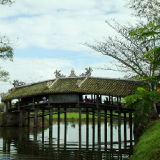
Cầu ngói Thanh Toàn, also known as Thanh Toan tile-roofed bridge, is a historic covered bridge located in Lang Xa Bau Village, Huong Thuy District, Huế, Vietnam. Cau ngoi Thanh Toan is not only a functional bridge but also a cultural treasure that reflects the history and heritage of the local community.
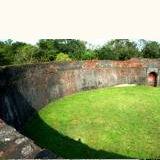
Hổ Quyền (Tiger Arena) was a place where tigers and elephants fought to the death in the style of Roman gladiatorial combat, to entertain the royal family and high-ranking guests. The Tiger Arena was built in 1830 along the southern bank of the Perfume River, about 200 meters from Long Chau Temple, where the royal war elephants were worshipped and buried.
Nguyễn Sinh Cung, Phú Thượng, Mỹ Thượng, Huế, Vietnam
750 views 💖 5
Chùa Ba La Mật is a pagoda associated with the name of a historical figure belonging to the prestigious Nguyen Khoa family of the ancient Capital of Hue: Nguyen Khoa Luan (aka Great Master Vien Giac). The pagoda is located in Phu Hoi, Thua Thien Hue, Vietnam.
Emperor Tự Đức’s tomb is located in a narrow valley in Duong Xuan Thuong village (currently Thuong Ba village, Thuy Xuan Commune, Hue City). It is one of the most beautiful works of royal architecture of the Nguyen dynasty. The tomb lies in a boundless pine forest, 8 km from Hue. Its construction started in December 1864 and finished in 1867.
Emperor Đồng Khánh was the ninth emperor of the Nguyen Dynasty of Vietnam. He reigned three years between 1885 and 1889. He was born on March 20, 1864, in Hue, the capital city of Vietnam at the time and was another adopted son of Tu Duc who usurped the throne shortly after the French gained control of Hue. The tomb of Emperor Dong Khanh is the smallest.
Emperor Khải Định who ruled 1916-1925, has chosen slope of Chau Chu mountain, 10 km from Hue, as the location to build his tomb (Mausoleum of Emperor Khai Dinh). The construction of the tomb was started on 1920 and lasted for 11 years.
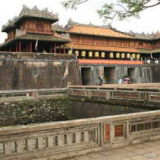
Hue Historic Citadel (Kinh thành Huế), located in Hue City, Vietnam, was the capital of the Nguyen Dynasty from 1802 to 1945. The Imperial City was built in the early 19th century during the reign of Emperor Gia Long and was designed to reflect the unique cultural and architectural traditions of Vietnam.
Chùa Diệu Đế is a Buddhist temple located in Phu Cat village, Hue city, Vietnam. It is situated in the central region of the country, known for its rich cultural heritage and historical significance. It was built by King Thieu Tri in 1844 on the platform of his old residence, where he was born in 1807.
Nam Giao Esplanade (Đàn Nam Giao) - The three-terraced heaven and earth esplanade - was constructed in 1806 where the Nguyen emperors held heaven and earth ceremonies in the spring every three years for the welfare of the country and the stability of the dynasty.
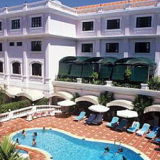
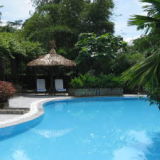
Pilgrimage Village Resort & Spa is ideally located in the quiet countryside in rustic village setting surrounding by lush tranquil gardens, yet near to famous historical landmarks. The resort embodies the subtle connection of traditional stylish and modern art concept.