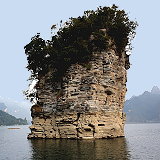
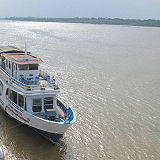
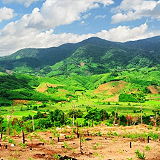
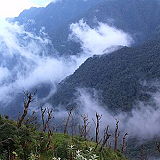
The Gâm River (Sông Gâm) is a river that originates from Guangxi, China, where it is known as Bai Nan He. When it enters Vietnam, it flows through Cao Bằng Province, then continues through Hà Giang and Tuyên Quang provinces before joining the Lô River. The river’s total length in Vietnam is approximately 217 km, with around 45 km flowing through Bắc Mê.
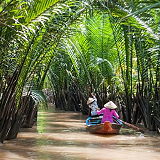
The Vàm Cỏ Tây River (Sông Vàm Cỏ Tây) is one of the two major branches of the Vàm Cỏ River in southern Vietnam, alongside the Vàm Cỏ Đông River. It originates in Cambodia and flows southward through the provinces of Long An and Tiền Giang in Vietnam, before merging with the Vàm Cỏ Đông River in Long An Province. Together, they form the larger Vàm Cỏ River system, which eventually drains into the Soài Rạp River and then into the East Sea.
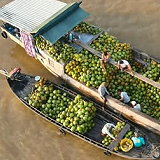
The Tien River (Sông Tiền or Tiền Giang) is a major branch of the Mekong River that flows through the Mekong Delta region in southern Vietnam. It is one of the two main distributaries of the Mekong River as it enters Vietnam, with the other being the Hau River (Sông Hậu).
The Vàm Cỏ River (Sông Vàm Cỏ) is a prominent river in southern Vietnam, flowing through the Mekong Delta region. It consists of two main branches: the Vàm Cỏ Đông (East Vàm Cỏ) and the Vàm Cỏ Tây (West Vàm Cỏ). These branches run through Long An Province and Tien Giang Province before merging and emptying into the Soài Rạp River, which leads to the East Sea.
The Cổ Chiên River (Sông Cổ Chiên) is a major distributary of the Mekong River in southern Vietnam. It is part of the intricate network of waterways that define the Mekong Delta region, playing a crucial role in transportation, agriculture, and the local ecosystem.
The Hậu River (Sông Hậu or Hậu Giang) is one of the two main branches of the Mekong River as it flows through Vietnam, the other being the Tiền River (Sông Tiền). The Hậu River, also known as Bassac River, is a vital waterway in the Mekong Delta region and holds significant economic, cultural, and ecological importance.
The East Vàm Cỏ River (Sông Vàm Cỏ Đông) is one of the two main branches of the Vàm Cỏ River in southern Vietnam. Originating in Cambodia, it flows through Tây Ninh Province and Long An Province in Vietnam before merging with the Vàm Cỏ Tây near the town of Vàm Láng in Long An Province. Together, these rivers form the larger Vàm Cỏ River system, which eventually connects to the Soài Rạp River and the East Sea.
Vietnam is a Southeast Asian country known for its rich history, stunning natural landscapes, vibrant culture, and delicious cuisine. Its population was 99.327.643 in 2022. The capital city, Hanoi, is known for its historic old quarter, colonial architecture, and vibrant street markets.
The Mekong Delta, located in southwestern Vietnam, is a vast and fertile region known for its intricate network of rivers, swamps, and islands. It is often referred to as the "Rice Bowl" of Vietnam due to its significant agricultural output. The Mekong Delta is formed by the Mekong River, which splits into multiple distributaries before emptying into the East Sea.
Dãy Trường Sơn, also known as the Annamite Range, is a significant mountain range in Southeast Asia that extends through several countries, primarily Vietnam and Laos, with a small part in Cambodia. This mountain range plays an essential role in the region's geography, ecology, and history.
The Sông Hồng, also known as the Red River, is one of the most significant rivers in Vietnam. It flows from southwestern China through northern Vietnam, playing a crucial role in the region's history, culture, and economy. The Red River forms a vast delta in northern Vietnam, which is one of the most fertile and densely populated areas in the country.
The Central Highlands, known as Tây Nguyên or Cao nguyên Trung phần in Vietnamese, is a significant region in Vietnam both geographically and culturally. It is known for its unique landscapes, rich cultural heritage, and diverse agricultural practices.
Hoàng Liên Sơn, also known as the Hoàng Liên Mountains, is a prominent mountain range located in northern Vietnam. The Hoang Lien Mountains extends from the southwest to the northeast of northern Vietnam, primarily in the provinces of Lào Cai and Lai Châu. It forms part of the larger Annamite Range, which spans the Indochinese Peninsula.