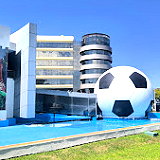
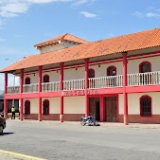
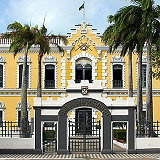
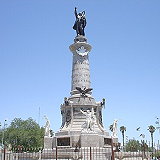
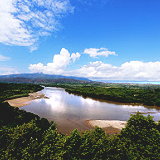
Luque is a city in the Central Province of Paraguay. The city is situated at an altitude of 120 m (390 ft). Its population was 263,604 in 2016. Luque stretches from Lake Ypacaraí to the west bank of the Paraguay River. It is a city that blends history, culture, and tradition, offering visitors an authentic and complete experience of Paraguay.
The Galapagos Islands are an archipelago of volcanic islands located in the Pacific Ocean, about 1,000 km off the coast of Ecuador in South America. They form the Galápagos Province of the Republic of Ecuador, with a population of over 33,000 in 2020. These islands are renowned for their unique and diverse flora and fauna, which inspired Charles Darwin's theory of evolution by natural selection.
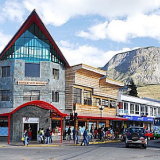
Coyhaique is the capital of both the Coyhaique Province and the Aysén region of Chile's Patagonia, along with the Simpson and Coyhaique rivers. The city is situated at an altitude of 302 m (991 ft). Its 2024 population was 57,823. One of its most important economic activities is livestock farming, producing meat, hides, and wool.
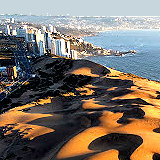
The Concón dunes are a coastal dune area located between Concón and Viña del Mar in the Valparaíso region of Chile. Situated on a sea shelf, these dunes rise approximately 80–130 meters above sea level. They are considered "hanging" or fossilized dunes because they are no longer replenished with sand from the beach. The area is highly valued for its geology, coastal landscape, and ecological significance.
Angel Falls is the world's tallest uninterrupted waterfall, located in Venezuela, with a height of 979 meters and a drop of 807 meters. Angel Falls is 15 times taller than Niagara Falls, with a total height difference of approximately 52 meters. Located in the Guayana Highlands, Angel Falls is just one of five amazing adventure areas in Venezuela.
Canaima National Park is located in the Gran Sabana region of southeastern Venezuela, bordering Guyana and Brazil. The park covers an area of approximately 30,000 km² (12,000 square miles) and is part of the larger Guiana Highlands. Its unique landscape and indigenous cultural heritage contribute to its conservation status.
Mount Roraima is a prominent landmark located within Canaima National Park, in the southeastern corner of Venezuela, bordering Guyana and Brazil. It is part of the Pakaraima mountain range and forms a natural border between these three countries. Mount Roraima is the highest peak in the Guyana Highlands.
San Carlos Fortress is a historic fortress located in the city of Pampatar on Margarita Island, in the Nueva Esparta state of Venezuela. The fortress plays a significant role in the region's history and is a popular tourist attraction. San Carlos Fortress reflects the military architecture of the time. It features thick walls, cannons, and strategic positions designed to defend against naval threats.
Lake Maracaibo is the largest lagoon in South America. Despite its name, it is classified as a lagoon because of a 34-mile (approximately 40 km) strait along its northern shore. With a surface area of 13,512 km² (5,217 sq mi), if counted as a lake, it would be the largest lake in South America, surpassing Lake Titicaca, and also one of the oldest lakes on Earth, formed 36 million years ago in the Andes Mountains.
Mochima National Park is a stunning coastal park located in the Sucre and Anzoátegui states of Venezuela. Established in 1973, the park spans over 94,000 hectares, encompassing both lush inland areas and a beautiful archipelago in the Caribbean Sea. Known for its crystal-clear waters, diverse marine ecosystem, and pristine beaches, it's a paradise for nature lovers and adventure seekers alike.
Falcón State is one of the 23 states of Venezuela. The state's population was 902,847 in 2011. The state capital is Coro. Falcón State is located north of the Coro system. Falcón State has rich fishing grounds; among the locally caught species are various types of shrimp, octopus, squid, mackerel, corocoro fish, mullet, anchovies, levranche, and dog shark.
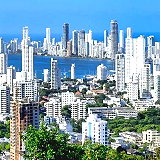
Cartagena, known since imperial times as Cartagena de Indias, is a city and one of the major ports on the northern Colombian Caribbean coast, along the Caribbean Sea. The city is notable for its stunning architecture and historic colonial center. Modern Cartagena is the capital of Bolívar Department, and had a population of 914,552 in 2020.
Ceara is one of Brazil's 26 states, located in the northeast of the country, on the Atlantic coast. The state's population was 914,552 in 2020. It is one of Brazil's major tourist destinations. The state is best known for its long coastline, with 600 km (370 mi) of sand. It also boasts mountains and valleys that produce tropical fruits. The state capital is the city of Fortaleza.
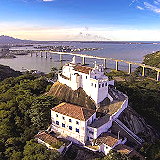
Espírito Santo is a state in southeastern Brazil. The state capital is Vitória, and the largest city is Serra. With its long coastline, the state has several of the country's major ports, and its beaches are important tourist attractions. The state's population was 3,833,712 in 2022.
Belo Horizonte is a city located in southeastern Brazil and is the capital of the state of Minas Gerais. It is the sixth largest city in Brazil and is known for its vibrant culture, striking architecture, and delicious cuisine. The city has a population of approximately 2.7 million people.
Campinas is a Brazilian municipality in São Paulo State, part of the country's Southeast Region. According to the 2020 estimate, the city's population is 1,139,047. The Seven Wonders of Campinas is a list of the most popular tourism spots in the city of Campinas.
Av. Dr. Heitor Penteado, 1671 - Parque Taquaral, Campinas - SP, 13087-000, Brazil
421 views 💖 1
Portugal Park, also known as Lagoa do Taquaral, is an urban public park in the city of Campinas, São Paulo, Brazil. Built around a beautiful lagoon and adjacent green space, it is a major recreational and sports park in the city, and even includes an observatory.
Fortaleza is the capital of Ceará state, located in northeastern Brazil. It is Brazil's fourth largest city, surpassing Salvador in the 2022 census with a population of over 2.4 million. The city forms the center of the Fortaleza metropolitan area, home to nearly 4 million people. Fortaleza is an important industrial and commercial center of northeastern Brazil.
R. Sobral - Centro, Fortaleza - CE, 60030-030, Brazil
266 views 💖 1
St. Joseph's Church, also known as St. Joseph's Cathedral, is a Catholic church in the Archdiocese of Fortaleza, located in the city of Fortaleza, Brazil. The current church was built on the site of the old church.
Cocó Ecological Park is an area located on the Cocó River, serving as both a conservation area and a national park. Situated in the city of Fortaleza, Ceará province, Brazil, it is considered of great importance, both to the city and to the biodiversity protected within its boundaries.
Rosario is a city in central Argentina, south of Santa Fe province. It had a population of 1,750,000 in 2020. It is home to the National Flag Monument, Independence Park, a pedestrian boulevard, and many other attractions. The city is also famous as the birthplace of footballer Lionel Messi.
Colonia is a department of southwestern Uruguay. The department's population was 135,717 in 2023. The departmental capital is Colonia del Sacramento, the country's second oldest city. Founded by the Portuguese in 1680, Colonia del Sacramento holds countless treasures and captivates with its beautiful beaches, modern attractions, upscale boutiques, and luxurious restaurants.
Encarnacion is a district and the capital of Itapúa Province in Paraguay, located on the west bank of the Paraná River, opposite Posadas, Argentina. The city sits at an altitude of 91 m (299 ft). Its population was 106,842 in 2022.
Ciudad Del Este is the second largest city in Paraguay and the capital of Alto Paraná province. Situated on the banks of the Paraná River, it is one of Paraguay's main commercial and tourist centers. The city's population was 325,819 in 2022.
Coronel Oviedo is a vibrant city in east-central Paraguay, boasting a rich history, lively culture, and stunning natural landscapes. It is the capital of Caaguazú Province. The city had a population of 52,400 in 2006. It is also home to the Roman Catholic Diocese of Coronel Oviedo.
San Lorenzo is a city in the Central Province of Paraguay. It is a suburb of Asunción and the third most populous city in Paraguay, with a population of 252,561 in 2016. The city is situated at an altitude of 126 m (413 ft). The main economic activities in San Lorenzo are trade and industrial production.
Villarrica is a city in Paraguay. Located in the heart of Eastern Paraguay, it is the capital and most populous city of the province of Guairá. Villarrica is one of Paraguay's oldest and most traditional cities, situated at an altitude of 200 m (660 ft) and with a population of 74,355.
Sacatepequez is one of Guatemala's 22 provinces. The province's population was 330,469 in 2018. The provincial capital is Antigua Guatemala. Other important cities include Ciudad Vieja and San Lucas Sacatepéquez. The region is mountainous and home to a series of active and inactive volcanoes, including Agua, Acatenango, and Fuego.
Potosi is a department in southwestern Bolivia. It is situated at an altitude of approximately 4,090 meters (13,420 feet) above sea level. The department's population was 856,419 in 2024. The capital is the city of Potosí. It is a barren, mountainous region, mostly wilderness with a vast plateau in the west, home to the world's largest salt flat, Salar de Uyuni.
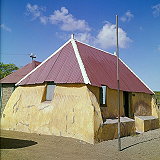
Bandabou is a district on the island of Curaçao, part of the Netherlands. It is one of three districts on the island, encompassing the northwestern regions. The district's population was 13,125 in 2011. This is Curaçao with its cactus-covered countryside, restored farmhouses, herds of goats roaming the roadsides, and small fishing villages on tranquil bays.
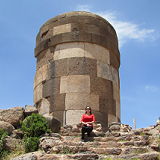
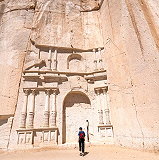
Sillustani is a pre-Inca cemetery located on the shores of Lake Umayo near Puno in Peru. The tombs, built above ground in tower-like structures called chullpas, are the remains of the Qulla people, an Aymara tribe conquered by the Inca Empire in the 15th century.
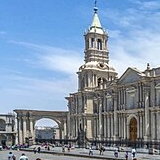
Arequipa is a city in Peru and the capital of the department of the same name. It is home to the Constitutional Court of Peru and is often referred to as the "legal capital of Peru". According to the 2017 national census, the city has an urban population of 1,296,278. Known for its colonial architecture and volcanic stone structures, Arequipa is an important cultural and economic center.
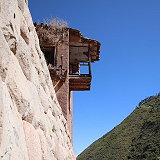
Tarawasi, also known as Tarahuasi, is an archaeological complex in Peru. Located in the Cusco region, Anta province, Limatambo district, approximately 72-80 km from the city of Cusco, it is one of the finest examples of Inca stone construction. It is characterized by its precise polygonal stonework, where the stones fit together perfectly without any binding material.
Arequipa is a department of Peru, located in the southwest of the country. The department's population was 1,814,396 in 2025. The departmental capital, also named Arequipa, is Peru's second-largest city. Arequipa offers a rich history and dramatic adventures, from breathtaking landscapes and diverse flora and fauna to world-class cuisine and exquisite art.
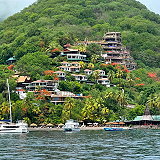
Located along the southwestern coast of Saint Lucia, in the eastern Caribbean, Soufrière is one of the island's most spectacular destinations. The town is home to two majestic mountains, Gros Piton and Petit Piton, rising from the sea. The town and surrounding area have a population of 7,935.
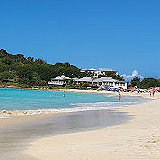
Ffryes Beach is a beautiful white sand beach located in the village of Ffryes, Saint Mary, on the west coast of Antigua. The sea at Ffryes Beach is usually very calm, with relatively easy access to shallow water, making it an ideal destination for families and those who are not very confident in their step.
Sint Michiel is an old fishing village in Willemstad, located south of Bullenbaai Bay on the west coast of Curaçao. The village had a population of 5,732 in 2011. The area is surrounded by natural areas around hills. Blue Bay is a bay with a beach, tourist attractions, luxury apartments, the Blue Bay Sculpture Garden, and the Jong Colombia football team.
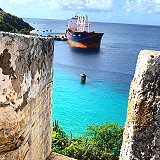
Beekenburg Fort is a historic fort located near Jan Thiel on the southeastern coast of Curaçao. It is a prominent landmark with a rich history and stunning scenery. It is a well-preserved 18th-century defensive structure, built by the Dutch during the colonial period around 1704 to protect the island's coastline and important port areas from pirates and potential invaders.
Jan Thiel is a popular resort area and destination located on the southeastern coast of Curaçao, a Caribbean island known for its vibrant culture, stunning beaches, and turquoise waters. It is part of the larger Jan Thiel Bay area, which includes beaches, resorts, and recreational facilities. Visitors can enjoy activities such as snorkeling, scuba diving, swimming, and paddleboarding.
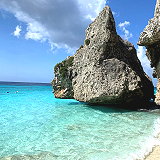
Sabana Westpunt is a rural village located at the northwesternmost point of the island of Curaçao, a Dutch nation in the Caribbean, known for its rugged coastlines, top diving spots, and stunning beaches. Westpunt is home to some of the island's most beautiful coral sand beaches, including Playa Kalki, Playa Forti, Playa Gipy, Grote Knip, and Kleine Knip. The population was 738 in 2011.
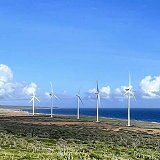
Tera Kora is a town in the Bandabou district of Curaçao Island. It is located near the center of the island. Grote Berg and Siberia are also part of Tera Kora. The town had a population of 4,388 in 2011. Tera Kora is known for its wind turbines and its proximity to natural parks, offering a tranquil, inland lifestyle.
Famous for its Gothic style, the church was built between 1930 and 1948, and the 18th-century marble altar was imported from Italy. The musical clock and windows come from Amsterdam, while the iron gate was manufactured in Cali in 1973. La Ermita Church houses images dating back more than three centuries, such as Our Lady of Sorrows, Saint Roque, Saint Jose, and Christ the Redeemer.
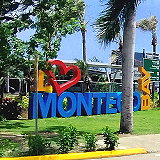
Montego Bay, Jamaica, is a vibrant Caribbean destination known for its stunning beaches, lively culture, and captivating attractions. Located on Jamaica's northwest coast, Montego Bay is a popular cruise port and tourist hub. It's famous for the beautiful Seven Mile Beach, its turquoise waters, and coral reefs.
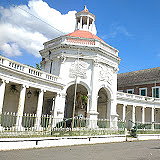
Spanish Town is the capital and largest town of the parish of St. Catherine in the historic Middlesex County, Jamaica. As the capital of Jamaica from 1534 to 1872, Spanish Town is the center of the island's social, economic, and political life. Its estimated population in 2021 was 145,018.
Vieux Fort is one of the ten districts of the Caribbean island nation of Saint Lucia. Vieux Fort is also the name of the district's main town. It is the second largest town in Saint Lucia, with a population of 14,754 in 2010, and is home to Saint Lucia's Hewanorra International Airport.
Trujillo is a coastal city in northwestern Peru and the capital of La Libertad Province. The city is situated on the banks of the Moche River, near its mouth into the Pacific Ocean, in the Moche Valley. It was once the site of the great prehistoric Moche and Chimu cultures before the Inca conquest and expansion. The city's population is projected to be 1,067,700 in 2025.
Gros Islet District, one of the ten first-level administrative units of the Caribbean island nation of Saint Lucia, comprises the northernmost point of the island, Cap Point, and the prominent Cap Estate. The district had a population of 20,872 in 2010. While the town of Gros Islet is an important administrative center, Rodney Bay serves as the district's main financial hub.
The Valparaíso region is one of Chile's 16 first-tier administrative units. With the second-highest population in the country, reaching 1,896,053 as of 2024, it has the second-highest population density in Chile after the Santiago metropolitan area in the southeast. The region's capital is the port city of Valparaíso.
Chihuahua is one of 31 states, along with Mexico City, that make up Mexico's 32 federal entities. The highest elevation is at Cerro Mohinora, at 3,300 m (10,800 ft). The state's population was 3,741,869 in 2020. The capital is Chihuahua City, and the largest city is Ciudad Juárez.
The Magdalena River is Colombia's main river, flowing north for approximately 1,528 km (949 miles) through the western half of the country. It is navigable by boat for much of its lower course, despite shifting sandbars at the delta's mouth, all the way to Honda, at the foot of the downstream falls. The river flows through the Magdalena Valley.