(Communes)
|
Minh Mang ấp An Bằng, phường Long Hồ, Kim Long, Huế, Vietnam Last Updated: 04/13/2026 |
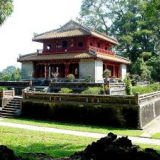
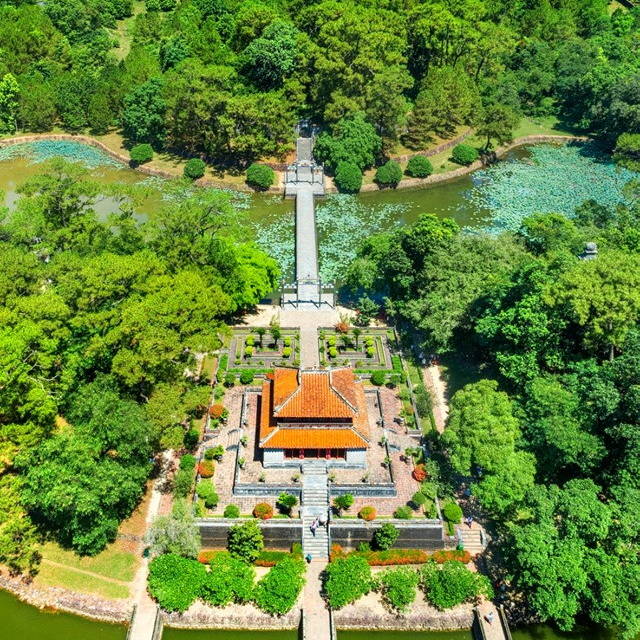
| The Mausoleum of Emperor Minh Mang is located in an enclosed hilly area of Cam Khe village, 12 km from the centre of Hue. The construction of the tomb of Minh Mang started in 1840 and was completed in 1843. | |
| Minh Mang tomb is a standard architectural complex consisting of 40 big and small constructions which include palaces, temple, pavilions, etc., designed on symmetric axis along the Dai Hong gate outside to the foot of La Thanh behind the Emperor's tomb. Emperor Minh Mang was the second emperor of the Nguyen dynasty in Vietnam, ruling from 1820 until his death in 1841. He was born on May 25, 1791, in Hue, the capital city of Vietnam at the time. His birth name was Nguyen Phuc Dam, and he was the fourth son of Emperor Gia Long, the founder of the Nguyen dynasty. Minh Mang was known for his strict Confucian policies and his efforts to consolidate and centralize the Vietnamese state. He implemented a series of reforms aimed at improving the administration, economy, and social order of Vietnam. He also undertook a vast building program, constructing palaces, temples, and other public works. Despite his achievements, Minh Mang's reign was marked by several challenges, including rebellions by ethnic minorities in the highlands and tensions with France. In 1833, Minh Mang issued aban on Catholicism and other foreign religions, leading to the persecution of Vietnamese Catholics and missionaries. This policy was largely driven by his desire to assert Vietnamese independence and maintain traditional Confucian values. Minh Mang died on January 20, 1841, at the age of 51, and was succeeded by his son, Emperor Thieu Tri. He is remembered as one of the most important emperors of the Nguyen dynasty and is considered by many Vietnamese to be a symbol of national pride and unity. | |
Wikipedia Facebook
Hue » Kim Long
Place » Historical Place
|
Thuan Thien Place » Historical Place Điện Gia Thành, also known as Lăng Thuận Thiên Cao Hoàng Hậu, is a historical site located in Hue, Vietnam. It is the royal tomb of Empress Dowager Tu Du, mother of Emperor Thieu Tri of the Nguyen Dynasty. Empress Thuan Thien (1762-1814), whose birth name was Tong Phuc Thi Lan, was the first wife of Nguyen Phuc Anh (the future Emperor Gia Long) and the mother of Crown Prince Nguyen Phuc Canh. 308 views 💖 3 👍 0Kim Long, Huế, Vietnam |
|
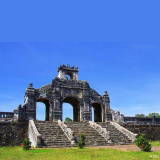
Lang Thoai Thanh Place » Historical Place Lăng Thoại Thánh is the tomb of the mother of emperor Gia Long. This is the mausoleum of Queen Hung To Hieu Khuong (1738-1811), the second wife of Nguyen Phuc Con (Luan) and the mother of King Gia Long. Her sure name is Nguyen Thi Hoa n. 319 views 💖 4 👍 0Kim Long, Hue, Vietnam |
|
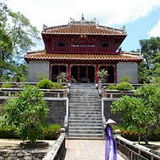
Van Mieu Hue Place » Historical Place Van Mieu Hue, also known as the Temple of Literature in Hue, is a historical site located in Thua Thien Hue, Vietnam. Van Mieu Hue is not only a significant historical and cultural site but also a place that highlights the importance of education and learning in Vietnamese society. It offers visitors a glimpse into Vietnam's imperial past and provides an opportunity to appreciate the beauty of traditional Vietnamese architecture. 289 views 💖 3 👍 0Đường Văn Thánh, Kim Long, Huế, Vietnam |
|
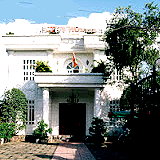
Lang Hoang De Gia Long Place » Historical Place The Mausoleum of Emperor Gia Long (Lăng Hoàng đế Gia Long) is located 16km from the centre of Hue, on top of the Thien Tho mountain, on the west bank of the Huong river. Construction of the tomb began in 1814 and was completed in 1820. 703 views 💖 5 👍 0Long Hồ, Kim Long, Hue, Vietnam |
|
Kim Long Place » City Kim Long is a ward in Hue City, Vietnam. Kim Long ward was formed by merging the entire natural and residential areas of Long Hồ, Hương Long and Kim Long. The ward's population was 48.999 people in 2025. 284 views 💖 1 👍 0Hue, Vietnam |