Egypt »
»
| Hypostyle Hall | |
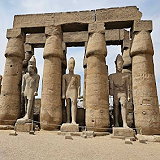
| The Hypostyle Hall is located within the Karnak Temple complex in the Amon-Re area. It is one of the most famous and magnificent structures in ancient Egyptian architecture and one of the most visited monuments of ancient Egypt. This structure was built around the 19th Dynasty of Egypt (approximately 1290–1224 BC). | |
| Serapeum | |
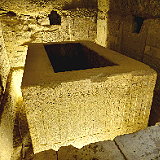
| The Serapeum at Saqqara is an ancient Egyptian burial site dedicated to the sacred bulls of the Apist sect of Memphis. These bulls were believed to be the embodiment of the god Ptah, who would become immortal after death under the name Osiris-Apis. The tomb was used from the time of Amenhotep III of the New Kingdom until the Ptolemaic period. | |
| Edfu Temple | |
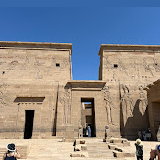
| The Edfu Temple, also known as the Temple of Horus, is one of the best-preserved and most significant ancient temples in Egypt. Located in the city of Edfu in the Aswan Governorate, the temple is dedicated to Horus, the falcon-headed god of the sky and kingship. | |
| Lighthouse of Alexandria | |
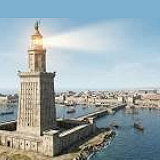
| The Lighthouse of Alexandria was a lighthouse built by the Ptolemaic Kingdom of ancient Egypt on the Egyptian island of Pharos, during the reign of Ptolemy II Philadelphus (280–247 BC). It is estimated that it was at least 100 meters (330 ft) tall. | |
| Grand Egyptian Museum | |
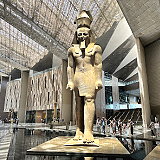
| The Grand Egyptian Museum (GEM) is a national archaeological museum in Giza, Egypt. Dedicated to ancient Egypt, its culture, society, and artifacts, the GEM is the world's largest museum dedicated to a single civilization. The museum houses a collection of Egyptian artifacts from various periods of Egyptian civilization, from the Predynastic to the Roman periods. | |
| El Alamein Military Museum | |
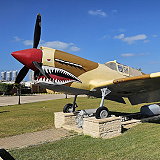
| The El Alamein Military Museum, located in the town of El Alamein, Egypt, is a historically significant museum specializing in key battles of World War II fought in North Africa. It's a must-see for history enthusiasts, offering insightful glimpses into military strategies, artifacts, and personal stories from one of the most important battlefields of the war. | |
| Maydoum Pyramid | |
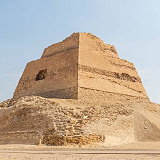
| The Meidum Pyramid, located about 65 km south of Cairo, near the Faiyum region, is an important archaeological site in Egypt. Believed to have been built during the transition period from the 3rd to the 4th Dynasty, it is often attributed to Pharaoh Huni and later completed by Pharaoh Sneferu. | |
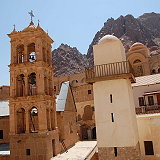
| Saint Catherine's Monastery | |
| St. Catherine's Monastery is a Christian monastery located on the Sinai Peninsula in Egypt. Situated at the foot of Mount Sinai, the monastery was built between 548 and 565 AD and is the oldest continuously inhabited Christian monastery in the world. | |
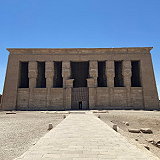
| Dendera Temple of Hathor | |
| The Dendera Temple is one of the most beautiful, mysterious, and best-preserved temples in Egypt. The temple complex is quite large, encompassing a basilica, two birthing houses, a sacred pool, and numerous other shrines and temples within. The architecture dates from various periods of ancient Egypt, with artifacts from the Middle Kingdom, the Ptolemaic period, and the Roman provincial period. | |
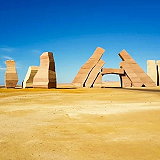
| Ras Mohamed | |
| Ras Muhammad is a national park in Egypt, located at the southern tip of the Sinai Peninsula, overlooking the Gulf of Suez to the west and the Gulf of Aqaba to the east. The park is becoming a major ecotourism hub in the region and is the most popular national park in Egypt, as well as one of the most sought-after diving destinations in the world. | |
| White Desert Egypt | |
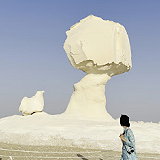
| The White Desert in Egypt is famous for its stunning geological formations, including bizarre shapes like mushrooms, ice cream cones, tents, and even spaceships. Each formation in the Black and White Desert tells a story, inviting you to interpret its shapes and lines for yourself. | |
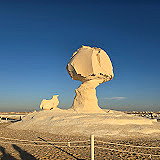
| White Desert National Park | |
| The White Desert in Egypt is famous for its stunning geological formations, including bizarre shapes like mushrooms, ice cream cones, tents, and even spaceships. As you travel through this spectacular landscape, you'll witness the delicate beauty of the pristine white chalk formations creating a truly magical atmosphere. | |
| Badr Museum | |
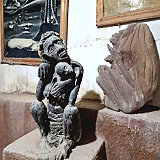
| The Badr Museum is one of Egypt's most unique art destinations in the heart of the Farafra oasis. This remarkable museum showcases the traditional life of the oasis through creative sculptures crafted entirely from the natural materials of the desert – sand, mud, and stone. The museum offers visitors insightful glimpses into Bedouin culture and desert traditions that have endured for centuries. | |
| Temple of Hibis | |
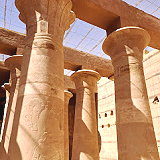
| The Temple of Hibis is the largest and best-preserved ancient Egyptian temple in the Khazar Oasis, and the only structure in Egypt dating from the Saite-Persian period (664–404 BC) that still stands today in relatively good condition. The temple was built from local limestone blocks next to a small sacred lake. | |
| New Valley | |
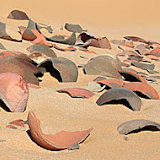
| The New Valley Governorate is one of the biggest governorates in Egypt. It occupies 37.6% of Egypt's total land area. Egyptian history is deeply ingrained in the New Valley. The governorate's population was 270,854 in 2024. This area contains numerous relics from the ancient Egyptian, Ptolemaic, Roman, Coptic, and Islamic civilizations. | |
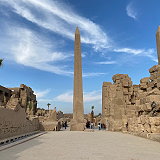
| Obelisk of Thutmose I | |
| The obelisk of Thutmose I, located within the Karnak temple complex, is a testament to the skill and splendor of ancient Egyptian civilization. Erected during the reign of Thutmose I, approximately 1493–1479 BC, the obelisk stands 21.7 meters (71 feet) tall on a square base measuring 1.8 meters (6 feet), and weighs a staggering 143 tons. | |
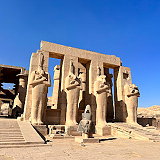
| Ramesseum | |
| The Ramesseum is a temple commemorating Pharaoh Ramesses II, the most famous king of ancient Egypt (who fought against the Hittites). The temple is located in the Theban necropolis in Upper Egypt, west of the Nile River, opposite the modern city of Luxor. It is the second largest temple in Egypt, covering an area of approximately 10 hectares (1,100,000 square feet). | |
| Step Pyramid of Djoser | |
| The Step Pyramid of Djoser is an archaeological site located in the Saqqara necropolis, Egypt, northwest of the Memphis ruins. It was the first pyramid built in Egypt. This six-tiered, four-sided structure is the oldest massive stone building in Egypt. It was constructed in the 27th century BC during the Third Dynasty to bury Pharaoh Djoser. | |

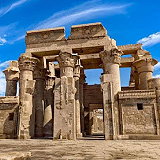
| Kom Ombo Temple | |
| The Kom Ombo Temple was built during the Greco-Roman period (332 BC - 395 AD). An older structure from the 18th Dynasty still survives, but only fragments remain. This temple is unique because it is essentially a double temple, dedicated to the crocodile god Sobek and the falcon-headed god Horus. The layout combines the two temples into one, each with its own gateway and chapel. | |
| Amenhotep III Sun Temple | |
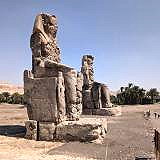
| The Temple of the Sun of Amenhotep III is located on the west bank of the Nile River, opposite the city of Luxor on the east bank. Standing 17 meters tall and weighing over 700 tons each, these two statues of Amenhotep III are known as the Memnon Colossus, but it is believed they were once part of the Pharaoh's lost funerary temple. | |