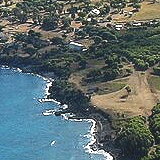
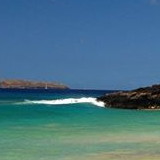
Kalawao County is a county in the U.S. state of Hawaii. The county had a population of 82 in 2020. The land slopes steeply up into towering mountains and the nearly mile-high Kamakou peak, then abruptly ends with emerald-green cliffs plunging into a vibrant turquoise sea dotted with desolate islets.
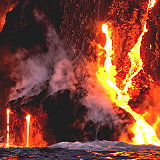
Hawaiʻi Volcanoes National Park is a United States national park located on the island of Hawaiʻi in the state of Hawaii. The park includes two active volcanoes: Kīlauea, one of the world's most active volcanoes, and Mauna Loa, the world's largest shield volcano.
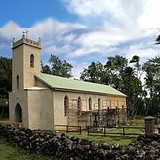
The Church of Saint Philomena was built in the Kalaupapa Leprosy Settlement on Molokai Island between 1872 and 1889. The original church was constructed in 1872 by leprosy patients living in Kalaupapa. Father Damien arrived in Kalawao in 1873 and helped expand the church twice.
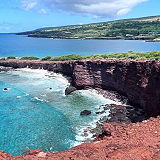
Lanai, Hawaii, is a smaller, quieter island compared to some of its more famous neighbors like Oahu and Maui. Known as the "Pineapple Island" due to its past as a pineapple plantation, Lanai offers a unique blend of luxury, tranquility, and unspoiled natural beauty. The island had a population of 3,367 in 2020.
Hawaii is an island state of the United States, in the Pacific Ocean about 2,000 miles (3,200 km) southwest of the U.S. mainland. Its population was 1,455,271 in 2020. Two-thirds of Hawaii residents live on O'ahu, home to the state's capital and largest city, Honolulu. There are six major islands to visit in Hawaiʻi: Kauaʻi, Oʻahu, Molokaʻi, Lānaʻi, Maui, and the island of Hawaiʻi!
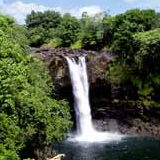
Rainbow Falls, also known locally as Waiānuenue Falls, is a majestic 80-foot (approximately 24-meter) waterfall located along the verdant Wailuku River in Hilo, on the main island of Hawai'i. Named after the spectacular rainbows that often appear in the mist on sunny mornings, this waterfall is an ideal destination for nature lovers, families, and photographers.
Hawaiʻi’s fifth largest island, Molokaʻi is only 38 miles long and 10 miles across at its widest point and is home to the highest sea cliffs in the world and the longest continuous fringing reef. Molokaʻi remains true to its island roots, with a high percentage of its population being of Native Hawaiian ancestry who continue to preserve their rural lifestyle thanks to their love of the land.
Ni‘ihau is the smallest inhabited island in Hawai‘i but nearly twice as large as uninhabited Kaho‘olawe. It is roughly 18 miles long and from 3 to 6 miles wide with a total area of approximately 70 square miles. The elevation of Pānī‘au, its highest peak, is only 1280 feet, which—along with being in the rain shadow of neighboring Kaua‘i—explains the arid climate of the island. Its population was 84 in 2020.
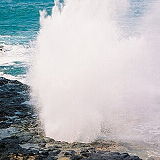
On Kauaʻi’s South Shore you’ll find the spectacular Spouting Horn blowhole, one of the most photographed spots on Kauaʻi. The Poʻipū surf channels into a natural lava tube here and releases a huge spout of water that can reach as high as 50 feet into the air. You’ll also hear a hiss and a roar that is the basis of a Hawaiian legend.
Honolulu County is a consolidated city-county located in the U.S. state of Hawaii. The city-county includes both the city of Honolulu and the rest of the island of Oahu, as well as several minor outlying islands. As of the 2010 census, the population was 953,207.
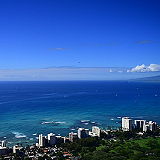
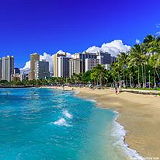
Oahu, Hawaii, is a beautiful and vibrant island known for its stunning beaches, rich cultural history, and bustling urban areas. Known as “The Gathering Place,” Oahu is home to the largest population of people as well as the best nightlife in Hawaii. In 2021 Oahu had a population of 995,638, up from 953,207 in 2010.
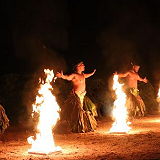
Paradise Cove Luau is one of the largest luau shows in Hawai'i. Located in the Ko Olina Resort, Paradise Cove features brilliant sunset views from the 12-oceanfront acres. Off-street parking or roundtrip transportation from Waikiki available.
Mauka Warriors Luau sets itself apart by exploring Polynesia’s history of wars and warriors – a significant but seemingly forgotten aspect of authentic Polynesian culture. Come enjoy a gorgeous view of Honolulu, delicious Polynesian cuisine, fascinating history, and a show to remember.
Wahiawa is a town located in the central plateau of the island of Oahu, surrounded by the Waianae Range to the west and the Koolau Range to the east. The population was 18,658 at the 2020 census. Wahiawa offers a mix of historical, cultural, and natural attractions, as well as a close-knit community atmosphere, making it a unique and desirable place to live or visit on the island of Oahu.
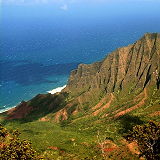
The Na Pali Coast provides a rugged grandeur of deep, narrow valleys ending abruptly at the sea. Waterfalls and swift flowing streams continue to cut these narrow valleys while the sea carves cliffs at their mouths. Extensive stone walled terraces can still be found on the valley bottoms where Hawaiians once lived and cultivated taro.
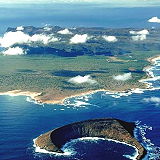
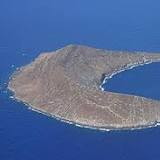
Lehua Island is a small, crescent-shaped island in the Hawaiian islands, 0.7 miles (1.1 km) north of Ni'ihau, due west of Kauai. The uninhabited, 279-acre (1.13 km2) barren island is a tuff cone which is part of the extinct Ni'ihau volcano.
Kauai, often referred to as the Garden Isle, is the oldest and fourth largest of the main Hawaiian Islands. It's known for its lush, tropical landscapes, stunning beaches, and diverse range of outdoor activities. The 2020 United States census population of the island was 73,298. The most populous town is Kapa'a.
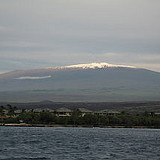
Mauna Kea is a dormant volcano and the highest peak located on the Big Island of Hawaii. It is part of the Hawaiian–Emperor seamount chain and rises prominently from the Pacific Ocean. The mountain offers recreational activities, including hiking and stargazing. Visitors can explore the unique landscape of cinder cones and lava flows on its slopes.
Molokini Crater is a popular snorkeling and scuba diving destination located in the Alalakeiki Channel between the island of Maui and Kaho'olawe Island. Molokini Crater is situated about 2.5 miles off the southwestern coast of Maui and is a partially submerged volcanic crater that forms a crescent-shaped islet.