|
Fasil Ghebbi Gondar, Ethiopia Last Updated: 01/09/2026 |
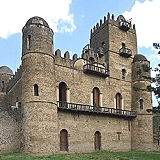
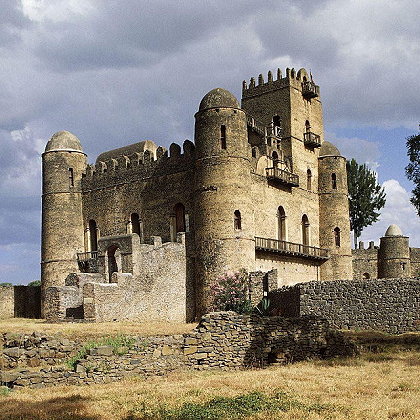
| Fasil Ghebbi is a fortress and royal area located in Gondar, a city in northern Ethiopia. It is renowned for its well-preserved medieval architecture, including castles, palaces, and other structures. Fasil Ghebbi is situated in the city of Gondar in the Amhara region of northern Ethiopia. Gondar was the capital of the Ethiopian Empire during the 17th and 18th centuries. | |
| Fasil Ghebbi served as the residence of Ethiopian emperors during the 17th and 18th centuries, particularly during the reign of Emperor Fasilides and his successors. The complex played a central role in the political and cultural life of the Ethiopian Empire. The architecture of Fasil Ghebbi is a unique blend of indigenous, Arab, Nubian, and Baroque European influences. The site features several castles, palaces, churches, and other buildings, showcasing the architectural diversity of the period. The Castle built by Emperor Fasilides is one of the main attractions within the enclosure. Known for its distinctive architecture, it reflects a combination of local and foreign influences. Located just outside the walls of Fasil Ghebbi, Debre Berhan Selassie Church is famous for its murals depicting biblical scenes, including the iconic images of angels. The church is one of the few structures that survived the various invasions and destructions in the region. Near the castle, there is a large rectangular pool believed to have been used by Emperor Fasilides for ceremonial bathing. The annual Timkat (Epiphany) celebration, during which the pool is blessed and participants reenact the baptism of Jesus, is a major event in Gondar. Fasil Ghebbi was not only a royal residence but also a center of learning and culture. The site housed a library and archives that were important for preserving the written heritage of Ethiopia. Visitors to Fasil Ghebbi can explore the historical and cultural richness of the site, appreciating the architectural grandeur and the role it played in Ethiopian history. The combination of palaces, churches, and the unique bathing pavilion makes it a fascinating destination for those interested in the country's heritage. | |
Wikipedia
Ethiopia » Eth
Place » Historical Place
|
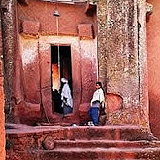
Beta Gabriel Raphael Place » Historical Place Biete Gabriel-Rufael is an underground church carved from a single block of rock, located in Lalibela, Ethiopia. This Orthodox church was built during the Kingdom of Axum. Its architecture suggests its original function may have been a fortified royal residence or an administrative building before being consecrated as a church, with its massive walls, few doorways, and tall, defensive exterior. 142 views 💖 1Lalibela, Ethiopia |
|
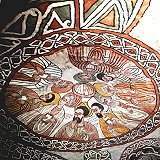
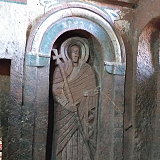
Abuna Yemata Guh Place » Historical Place The Abuna Yemata Guh Mosque is a monolithic mosque located in the Hawzen district of the Tigray region of Ethiopia. Situated at an altitude of 2,580 meters (8,460 ft), it is accessible only by hiking. It is notable for its dome and frescoes dating back to the 5th century, as well as its unique architecture. 1081 views 💖 2Ethiopia |
|
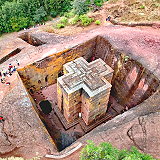
Church of Saint George Place » Historical Place Completely different from other churches in Lalibela, St. George's Church has become a symbol of Ethiopia. Carved into volcanic rock centuries ago, this church represents the spiritual heart of Ethiopia. 813 views 💖 1Lalibela, Ethiopia |
|
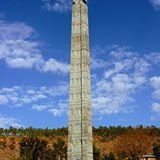
Obelisk of Axum Place » Historical Place The Obelisk of Axum is a 24-meter (79 ft) high, 160-tonne (160 British tonnes; 180 US tonnes) phonolite obelisk dating from the 4th century AD, located in the city of Axum, Ethiopia. The obelisk is decorated with two false doors at the base and features window-like motifs on all sides. The top of the obelisk is semicircular, formerly encased in a metal frame. 709 views 💖 1Aksum, Ethiopia |
|
Ethiopia Place » City Ethiopia is a landlocked country in the Horn of Africa. Ethiopia has a total area of 1,100,000 square kilometres (420,000 sq mi). As of 2022, it is home to around 123.5 million inhabitants. The national capital and largest city, Addis Ababa, lies several kilometres west of the East African Rift that splits the country into the African and Somali tectonic plates. 475 views 💖 1Ethiopia |