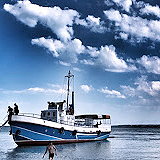
Central Denmark, also known in Danish as Midtjylland or Mid-Jutland, is one of Denmark's five administrative regions, encompassing the central part of the Jutland peninsula and surrounding islands such as Samsø. Its population was 1,373,799 in 2025.
Nestled deep within Armenia lies Lake Sevan, a natural wonder and a testament to the region's rich history. One of the world's largest high-altitude lakes, Lake Sevan offers not only breathtaking scenery but also a journey through time and culture. Located in the Gegharkunik province, at an altitude of 1,900 m (6,234 ft) above sea level, the lake is fed by 28 rivers and streams.
Sibiu County is a county of Romania, located in the historical Transylvania region. The county seat is the town of Sibiu, which is situated along the Cibin River, a tributary of the Olt River. The county's population was 388,326 in 2021.
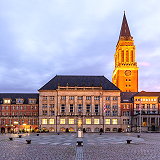
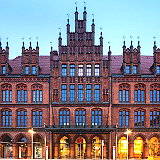
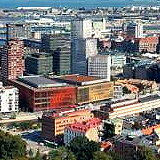
Kiel is the capital and most populous city of the state of Schleswig-Holstein in northern Germany. With a population of 252,668 in 2024, it is the largest German city located on the Baltic Sea. The city is situated on Kieler Förde, part of the Bay of Kiel, in the southeastern part of the Jutland peninsula, at the mouth of the Schwentine River.
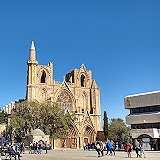
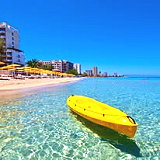
The Famagusta district is one of six districts of Cyprus. Although the entire district covers an area of 1,985.3 km² (766.5 sq mi), only about 244 km² (94 sq mi) is under the de facto control of the Republic of Cyprus. The majority of the district, including its capital and largest city, Famagusta, has been under the rule of the Turkish Republic of Northern Cyprus since the 1974 invasion. The district's population was 54,318 in 2021.
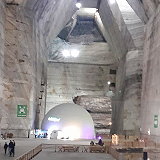
The Mina Unirea salt mine, located in Slanic, Romania, is one of the region's most prominent salt mines, renowned for its historical significance and unique underground environment. The mine extends deep underground, with a vast system of tunnels and chambers. It is famous for its large salt halls and chambers, some of which are used for tourism and health treatments.
Northern Cyprus is a de facto country comprising the northern third of the island of Cyprus. It is recognized only by Türkiye. The population of Northern Cyprus was 382,836 in 2021. Its capital and largest city is North Nicosia. Northern Cyprus is truly a hidden gem in the Mediterranean; with lush, unspoiled landscapes, friendly locals, plenty of exciting activities, and fantastic resorts.
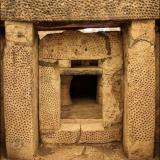
The Mnajdra Archaeological Park is part of the Maltese prehistoric temple complex near Qrendi, in the southwest of the island. It shares an archaeological park with Ħaġar Qim. Mnajdra is a megalithic temple complex dating from the late Neolithic period, over 5,000 years old. It is one of Malta's most important prehistoric sites and is famous for its temple layout and sun-oriented arrangement.
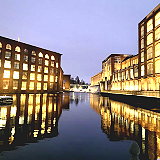
The Vapriikki Museum Centre is a complex of museums operating within the former Tampella factory grounds in Tampere, Finland. Vapriikki is also home to the Tampere Natural History Museum, the Rupriikki Media Museum, the Mineral Museum, the Finnish Hockey Hall of Fame, the Postal Museum, and the Finnish Games Museum.
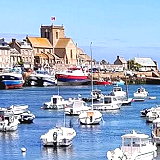
Normandy is a geographical and cultural region in northwestern Europe, closely coinciding with the historical Duchy of Normandy. Its population in 2017 was 3,499,280. Normandy is best known for the beaches of the dramatic D-Day landings during World War II, and the iconic medieval island abbey of Mont-Saint-Michel.
Catanzaro, also known as the "City of Two Seas," is an Italian city with a population of 86,183 in 2020. It is the capital of the Calabria region and the province of Calabria, and the second most populous city in the region, after Reggio Calabria. Its highest elevation is 342 m (1,122 ft).
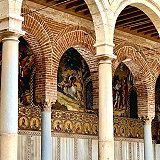
Palazzo dei Normanni, or the Norman Palace, is a historic royal palace in Palermo, Sicily, Italy. Also known as Palazzo Reale di Palermo, it has been the seat of the Regional Council of Sicily since 1946. Its most striking feature is the Cappella Palatina, a 12th-century chapel renowned for its magnificent gold mosaics and a blend of Norman, Arabic, and Byzantine artistic traditions.
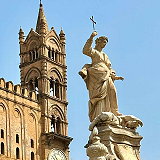
Palermo is the capital and largest city of the autonomous region of Sicily in southern Italy, situated on the bay of the same name overlooking the Tyrrhenian Sea. The city sits at an elevation of 14 m (46 ft) above sea level. Its population is projected to be 626,273 in 2026.
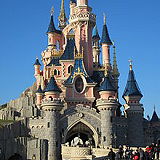
Disneyland Paris is a theme park and resort located in Marne-la-Vallee, France. It was originally called Euro Disney Resort and opened on April 12, 1992. The resort includes two theme parks, Disneyland Park and Walt Disney Studios Park, as well as numerous hotels, restaurants, shopping and entertainment venues.
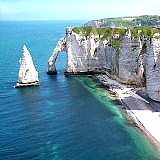
Etretat is a commune in the Seine-Maritime department in the Normandy region of Northwestern France. It is a tourist and farming town. Its population was 1,167 in 2022. It is best known for its cliffs, including three natural arches and the pointed needle.
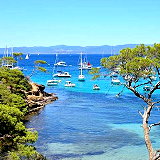
The island of Porquerolles is part of the archipelago of the Hyères islands also called the Golden Islands. This island is located in the commune of Hyères in the Var in the south of France. The island of Porquerolles is 7 km long, and approximately 3 km wide for an area of 1250 ha. The charming village welcomes you as soon as you arrive by boat at the port with hotels, restaurants, shops & boutiques.
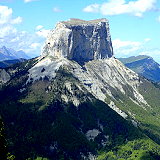
Mount Aiguille is located in Trièves, in the commune of Chichilianne, south of Grenoble, in the Auvergne Rhône Alpes region. Known as one of the Seven Wonders of Dauphiné, this mountain is a relatively flat limestone plateau surrounded by steep cliffs. Mount Aiguille reaches an altitude of 2087 meters, slightly lower than Grand Veymont.
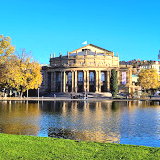
The Stuttgart region is a metropolitan area located in the heart of the Stuttgart metropolitan region of the state of Baden-Württemberg, Germany. The region includes the city of Stuttgart. The Stuttgart region is the economic, scientific, and political center of southwestern Germany, with a population of 2,700,000.
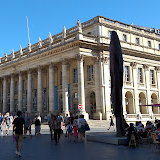
Bordeaux is a city located on the Garonne River in the Gironde department, southwestern France. A port city, Bordeaux is the capital of the Nouvelle-Aquitaine region and also the provincial capital of Gironde. The city had a population of 267,991 in 2023. World-renowned as the wine capital of France, Bordeaux captivates visitors with its famous vineyards, world-class cuisine, and rich cultural heritage.
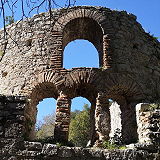
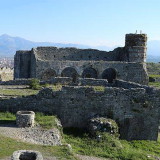
The Butrint National Archaeological Park is located in southern Albania, near the city of Sarande. It is one of the country's most important archaeological sites and is renowned for its rich history spanning multiple civilizations. The park preserves the remains of an ancient city, including a theater, public baths, forums, temples, and residential areas. The city's layout reflects Greek and Roman influences.
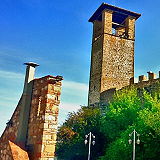
Preza Castle is a 15th-century castle ruin. It sits atop a hill northwest of the town of Preza, between the Tirana and Durrës plains in central Albania. Preza Castle played a strategically important role for the city, particularly during the Middle Ages, as it controlled the road from Durrës to Kruja on the Tirana plain.
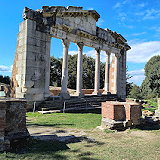
The Apollonia archaeological site in Pojan, Albania, is one of the country's most important ancient archaeological sites. This once-thriving city of the ancient world offers a glimpse into the region's rich history, blending Greek and Roman influences. Located near the modern city of Fier, the site is renowned for its well-preserved ruins, historical significance, and picturesque scenery.
Vlorë County is one of Albania's 12 counties, with Vlorë City as its capital. As of 2023, the county had a total population of 146,681. Geographically, Vlorë is a mountainous county. It stretches along the Adriatic Sea and especially the Ionian Sea, forming the Albanian Riviera. The highest natural point is Çikë, at 2,044 meters (6,706 ft).
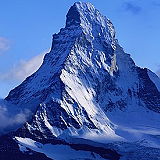
The Matterhorn is one of the world's most iconic and recognizable mountains, located in the Pennine Alps on the border between Switzerland and Italy. At 4,478 meters (14,692 feet) above sea level, the Matterhorn is one of the highest peaks in the Alps. Its distinctive pyramidal shape is the result of erosion by glaciers over millions of years.
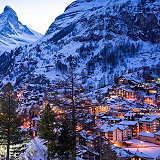
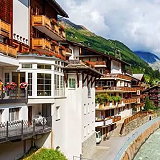
Zermatt is a popular, car-free mountain village with charming shops and stunning scenery in southern Switzerland. Situated at the top of the Mattertal Valley, at an altitude of 1,620 m (5,310 ft), at the foot of Switzerland's highest peaks, Zermatt is famous for the Matterhorn, world-class skiing, and Alpine climbing. The population of Zermatt was 5,786 in 2007.
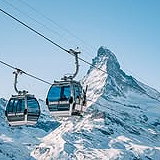
Matterhorn Glacier Paradise, located in Zermatt, Switzerland, is renowned as Europe's highest cable car station, offering visitors breathtaking views and numerous attractions. At approximately 3,883 meters (12,740 feet) above sea level, it provides panoramic views of the Matterhorn and the surrounding Alps, along with an impressive ice cave featuring sculptures and tunnels.
Sunnegga, located in Zermatt, Switzerland, is a popular mountain resort known for its stunning scenery and family-friendly activities. It sits at an altitude of approximately 2,288 meters (7,499 feet) above sea level. Activities include hiking, mountain biking, and picnicking in the summer; and skiing, snowboarding, and sledding in the winter.
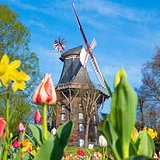
Hanover is the capital and largest city of the state of Lower Saxony, Germany. The city had a population of 535,932 in 2021. It impresses with its cultural diversity, history, and modern urban development. Its distinct urban structure, interspersed with expansive green spaces, facilitates exploration and leisurely strolls.
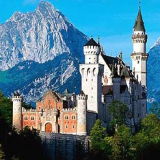
Neuschwanstein Castle is a magnificent 19th-century palace located in the village of Schwangau, in southern Germany, near the Bavarian town of Füssen. The castle sits atop a hill overlooking the picturesque Hohenschwangau Valley and the nearby foothills of the Alps, surrounded by beautiful gardens and forests.
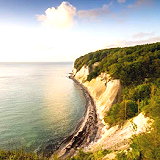
Jasmund National Park is a nature reserve located on the Jasmund Peninsula, northeast of the island of Rügen in the Mecklenburg-Vorpommern region of Germany. It is famous for the Rügen Chalk Cliffs, the largest in Germany, with the highest peak being Königsstuhl, 118 m (387 ft) above Baltic Sea level. The highest point in the entire park is Piekberg, 161 m (528 ft) above sea level.
Malmö is the third largest city in Sweden, after Stockholm and Gothenburg. Located on the Öresund Strait on the southwest coast of Sweden, it is the largest city in Scania, with an urban population of 368,135 in 2025, and is the capital of Skåne County. Malmö is a natural crossroads for people and cultures from all over the world.
Schwerin is the capital and second-largest city of the state of Mecklenburg-Vorpommern in northeastern Germany, and of the Mecklenburg region, after Rostock. In 2024, the city had 98,308 inhabitants, making it the least populated capital city of any German state. The city serves as a gateway to the Lake Mecklenburg region, Germany's largest continuous network of lakes and canals.
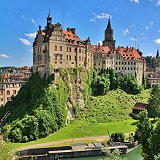
Perched on a towering cliff overlooking the Danube River, Sigmaringen Castle was originally built as a fortress. Over the centuries, it has been transformed into a royal palace, complete with fairytale-like towers and minarets, bay windows, and terraces.
Bremen is the capital of the Hanseatic League, a free state of Germany comprising two cities: Bremen and Bremerhaven. It is an important port city with a population of 586,271 as of 2024. Bremen is a city where different aspects of history, tradition, science, nature, and culture blend together to create a fascinating whole.
Sylt is a picturesque island located in the northernmost part of Germany, in the state of Schleswig-Holstein. It is a popular vacation destination known for its beautiful beaches, dunes, and natural landscapes. Sylt is also known for its upscale resorts, luxury spas, and fine dining restaurants, making it a popular destination for affluent travelers.
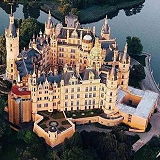
Schwerin Castle, also known as Schwerin Palace, is a stunning historic castle located in the city of Schwerin, the capital of the Mecklenburg-Vorpommern state in northern Germany. The castle stands as a prominent symbol of the region's history and architectural heritage.
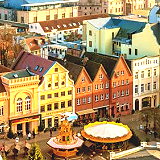
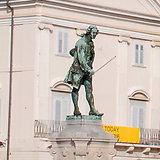
Tartini Square is the largest and main town square in Piran, Slovenia. This vibrant square is a must-visit destination for anyone exploring this charming seaside town. Tartini Square is not just about history; it also features stunning architecture and modern renovations.
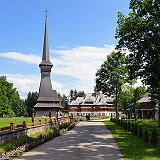
The Church of the Archangel Michael in Săpânța-Peri, in the village of Săpânța, Maramureș region, Romania, is the tallest wooden church in the world. The tower of the monastery is visible from five kilometers across the Tisza River, and is admired by Romanians in the Transcarpathia region.
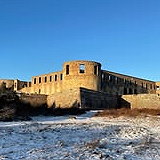
Borgholm Castle in Borgholm, Sweden, is now just the ruins of a fortress first built in the latter half of the 13th century and rebuilt several times in the following centuries. It was connected to the Halltorp estate to the south. The castle was destroyed in a fire on October 14, 1806. Its ruins subsequently became one of the most magnificent monuments in Sweden.
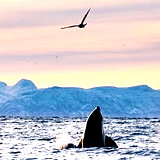
Troms is a county in northern Norway. To the west lies the Norwegian Sea (Atlantic Ocean). The county had a population of 169,610 in 2024. The entire county lies north of the Arctic Circle. Behold the aurora borealis in autumn and winter, and the endless summer days.
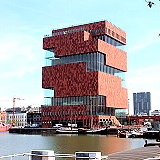
The Museum of Strooms (MAS aan de Stroom) is located along the Scheldt River in the Eilandje district of Antwerp, Belgium. Opened in May 2011, it is the largest museum in Antwerp. MAS houses 470,000 artifacts, most of which are stored in warehouses. The first exhibition area open to visitors is the "warehouse," which contains 180,000 artifacts.
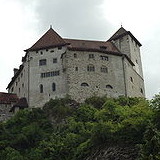
Gutenberg Castle is a historical landmark located on a hill overlooking the village of Balzers, which is located in the southern part of Liechtenstein. The castle dates back to the 12th century and has a rich history that spans centuries. It is one of the oldest and most well-preserved castles in Liechtenstein.
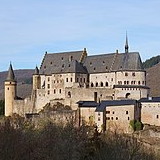
Vianden Castle is a medieval fortress located in the town of Vianden, in the north-eastern part of Luxembourg. The castle was originally built in the 10th century as a fortified castle, but was expanded and rebuilt several times over the centuries.
The fortress of Prizren is a medieval castle in Prizren in southern Kosovo. It was built on a hill above the city, under which Prizren gradually developed into a large city. The fortress was declared a Cultural Monument of Special Importance in 1948. Layers of prehistoric, Roman and late antiquity have been preserved under its walls.
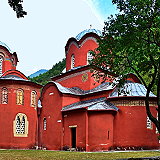
The Patriarchate of Peć Monastery is an important religious and historical site located in Kosovo. It is a significant spiritual center of the Serbian Orthodox Church and is recognized for its architectural and cultural heritage. The monastery complex was founded in the 13th century, with significant reconstruction and expansion taking place in the 14th century.
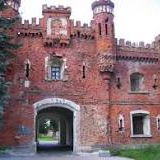
The Brest Fortress, also known as the Hero Fortress or Brest-Litovsk Fortress, is a 19th-century historic military fortress located in Brest, Belarus. It is one of the most significant landmarks in the country and holds great historical importance. The Brest Fortress stands as a poignant reminder of the tremendous human cost and bravery that occurred during World War II.
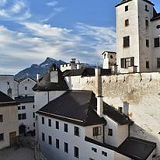
Fortress Hohensalzburg is a real eye-catcher, high above the Baroque towers of the city. The castle remains a visible landmark to this day and is an unmistakable feature of Salzburg’s world-famous skyline. From afar, the mighty walls begin to reveal the history visitors experience at first hand within these sturdy defenses.
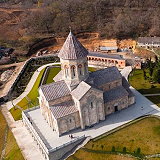
Bodbe Monastery, located near the charming town of Sighnaghi in eastern Georgia, is a revered Orthodox Christian site with a history dating back to the 9th century. Originally established to honor Saint Nino, the woman credited with converting Georgia to Christianity in the 4th century, the monastery has long been an important pilgrimage destination. Saint Nino is buried at Bodbe, and her grave is considered a sacred site.
Rozafa Castle, located in Shkodër, Albania, is an ancient fortress perched on a hill overlooking the city and the surrounding landscape. Rozafa Castle is not only a historical site but also an important cultural and symbolic landmark for the people of Shkodër.
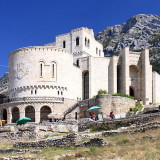
Kruja Castle, located in the town of Kruja, Albania, is an important historical and cultural monument of the country. It was the center of the Skanderbeg rebellion against the Ottoman Empire and is a symbol of the Albanian heritage and spirit of resistance.