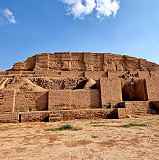
The Chogha Zanbil Ziggurat is an ancient Elamite architectural complex in Khuzestan Province, Iran. It is one of the few surviving ziggurats outside of Mesopotamia. This ziggurat is considered the best-preserved example of a stepped pyramid.
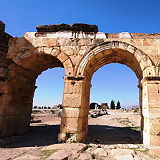
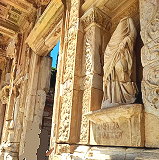
Hierapolis-Pamukkale is a remarkable archaeological site located in the Pamukkale district of Denizli province, Türkiye. It is renowned for its unique combination of natural hot springs, white stone terraces, and well-preserved ancient ruins. The site is considered a treasure of both historical and geological importance.
Çarşı, İskele Cd. No:102, 07400 Alanya/Antalya, Türkiye
1099 views 💖 9
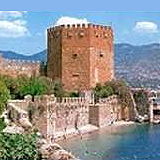
The Red Tower is an iconic landmark located on the harbor of Alanya, overlooking the Mediterranean Sea. It is part of the city's historic fortifications and offers panoramic views of the surrounding area. The Red Tower was built in the 13th century by the Seljuks, a prominent Turkish dynasty of the time.
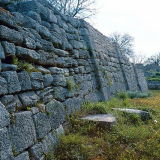
Troy, located in the Hisarlik area of the Çanakkale Province in Turkey, is an ancient city that holds immense historical and archaeological significance. Troy is the name of the Bronze Age city featured in the Trojan War of ancient Greek oral and literary tradition (Walls of Troy)
The Aegean region is one of the seven geographical regions of Türkiye. The largest city in the region is İzmir. Other major cities include Manisa, Aydın, Denizli, Muğla, Afyonkarahisar, and Kütahya. The region has the longest coastline, the ancient ruins of Ephesus and Pergamon, Bodrum, and Pamukkale. The population of the region was 10,477,153 in 2021.
The Mediterranean region is a geographical area of Türkiye. The population of this region was 10,584,506 in 2022. The Mediterranean region of Türkiye, also known as the Turquoise Coast, is a stunning area stretching along the southern coast of the country. The Toros Mountains, a mountain range running from west to east, cover much of this region.
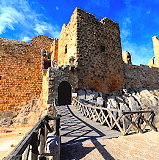
Ajloun Castle is a 12th-century Islamic castle located in northwestern Jordan. The castle sits atop Mount ‘Auf and offers visitors spectacular views of the Jordan Valley and the surrounding desert. From this elevated position, the castle oversees three small valleys (wadi) that flow down into the Jordan Valley.
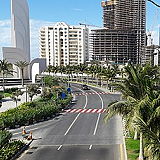
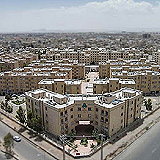
Jeddah is a major city located on the west coast of Saudi Arabia. It is the second largest city in the country and serves as an important commercial and cultural center. Jeddah is a vibrant coastal city on the Red Sea, shaped by centuries of cultural exchange. The city's population was 4,697,000 in 2021.
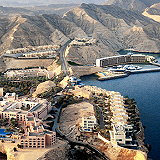
Located in Muscat, just a short drive from the city center and nestled in a tranquil cove, Barr Al Jissah is a luxurious resort on the Gulf of Oman. The visionary blend of architecture inspired by Oman's rich heritage and the surrounding natural landscape gives Barr Al Jissah its unique character, making it a truly upscale destination.
Mashirah Island is the largest island in Oman, located about 12 km off the eastern coast of the Sultanate in the Arabian Sea. This beautiful island enjoys very stable winds during the summer months of April to September. Average wind speeds range from 20-30 knots, and the weather is consistently pleasant, with temperatures between 25-30°C.
Ash Sharqiyah South Governorate is a Governorate of Oman. The Governorate's population was 315,460 in 2020. It comprises five wilayat: Sur, Al Kamil Wa Al Wafi, Jalan Bani Bu Hassan, Jalan Bani Bu Ali, and Masirah, with Sur being the administrative center.
Al Anbar Governorate is the largest governorate in Iraq by area. Encompassing much of the western part of the country, it borders Syria, Jordan, and Saudi Arabia. Its population was 2,004,418 in 2024. The provincial capital is Ramadi. The province is heavily dependent on the Euphrates River, which flows through major cities such as Ramadi, Fallujah, and Hit.
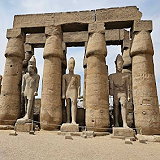
The Hypostyle Hall is located within the Karnak Temple complex in the Amon-Re area. It is one of the most famous and magnificent structures in ancient Egyptian architecture and one of the most visited monuments of ancient Egypt. This structure was built around the 19th Dynasty of Egypt (approximately 1290–1224 BC).
Sistan and Baluchestan Province is the second largest of Iran's 31 provinces, after Kerman. Located in the southeastern part of the country, it borders Afghanistan and Pakistan, and its capital is Zahedan. The province's population was 2,775,014 in 2016. Major cities include Khash, Iranshahr, Saravan, and the commercial port of Chabahar on the Gulf of Oman.
Ajloun Governorate is one of the governorates of Jordan. The governorate's population was 216,200 in 2024. The governorate capital is Ajloun, a hilly town in northern Jordan. This place is famous for the impressive ruins of a 12th-century castle, now known as Ajlun Castle.
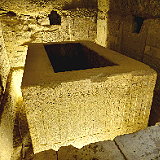
The Serapeum at Saqqara is an ancient Egyptian burial site dedicated to the sacred bulls of the Apist sect of Memphis. These bulls were believed to be the embodiment of the god Ptah, who would become immortal after death under the name Osiris-Apis. The tomb was used from the time of Amenhotep III of the New Kingdom until the Ptolemaic period.
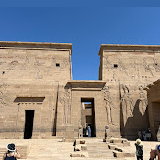
The Edfu Temple, also known as the Temple of Horus, is one of the best-preserved and most significant ancient temples in Egypt. Located in the city of Edfu in the Aswan Governorate, the temple is dedicated to Horus, the falcon-headed god of the sky and kingship.
Nabatieh Province is one of Lebanon's nine provinces. Its capital is Nabatieh City. The population in 2017 was 383,839. Nabatieh is renowned for its historical sites, rich cultural heritage, and natural beauty, including Neolithic and Phoenician sites, and is home to Beaufort Castle, an iconic medieval fortress.
Yeni, Haleplibahçe Cd. No:115, 63210 Şanlıurfa Merkez/Şanlıurfa, Türkiye
182 views 💖 1
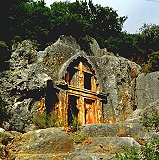
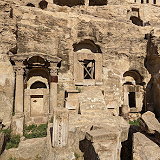
The Kızılkoyun Roman Tombs (Kızılkoyun Nekropolü) in Şanlıurfa, Türkiye, is an important archaeological site dating from the Roman period, specifically from the 2nd to the 4th centuries AD. The necropolis comprises between 75 and 103 tombs carved into the rock face and decorated with reliefs, sculptures, and even door mechanisms.
Haleplibahçe, 2372. Sk. No:74/1, 63200 Eyyübiye/Şanlıurfa, Türkiye
170 views 💖 1
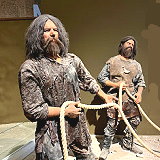
The Sanlıurfa Archaeological Museum is located in the city of Şanlıurfa in southeastern Türkiye. The museum is currently displaying around 10,000 artifacts. Visitors to the museum will have the opportunity to admire the world's oldest statue, a replica of the Göbeklitepe D temple, the original Nevali Çori temple, numerous historical cartoons, cartoons about the Prophet Abraham...
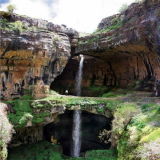
Baatara Gorge Waterfall, also known as the Three Bridges Waterfall, is a stunning natural wonder located in the village of Meghraq, Lebanon. The Baatara Gorge Waterfall is formed by a series of limestone caves and a sinkhole. Water cascades down through a vertical fissure, creating a spectacular waterfall plunging into the gorge below.
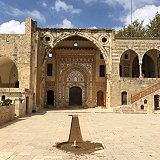
Beiteddine Palace is a historical and architectural gem located in the town of Beited-Dine, in Lebanon's Chouf Mountains. Built in the early 19th century, the palace is an extraordinary example of Lebanese architecture, blending Italian, Arabic, and Ottoman styles. The exquisite stone carvings, mosaic floors, vaulted ceilings, and beautifully landscaped courtyards are testaments to the craftsmanship and splendor of that era.
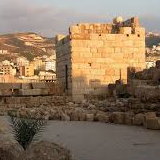
Byblos Castle is a Crusader castle in Byblos, Lebanon. During the Crusades, it was known as Gibelet Castle, or Giblet, and belonged to the Genoese Embriaco family, lords of the city. The castle is located adjacent to the Phoenician archaeological site, which includes the ruins of the Baalat Gebal Temple and the Obelisk Temple.
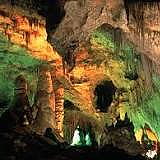
The Jeita Caves are a stunning natural wonder located in Keserwan, near Beirut, Lebanon. The Jeita Caves are a system of interconnected limestone caves and underground rivers, nestled in the picturesque Nahr al-Kalb valley. It is divided into two main parts: the upper cave, known as Jeita I, and the lower cave, Jeita II.
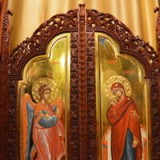
North of the village of Kousba lies the Hamatoru Monastery, built into a rock niche in a high cliff overlooking the sacred Kadisha Valley. Hamatoru is 84km from Beirut. The Church of St. Jacob is the oldest part of the monastery, dating from the 4th century, while a large 7th-century cross rises above the exterior entrance.
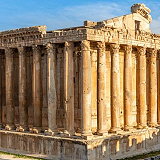
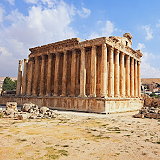
The Temple of Bacchus in Baalbek is one of the best-preserved ancient Roman temples in the world, and it is dedicated to Bacchus, the god of wine, revelry, and exhilaration. Built in the 2nd century AD, this temple is often overshadowed by the larger Temple of Jupiter nearby, but it stands out for its exquisite craftsmanship and architecture.
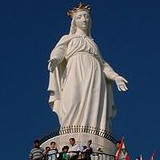
The Shrine of Our Lady of Lebanon is a Marian shrine and pilgrimage site in Lebanon. The shrine belongs to the Maronite Patriarchate, which has entrusted its administration to the Maronite Missions of Lebanon since its founding in 1904. It is one of the most important shrines in the world honoring the Virgin Mary, the Mother of Jesus.
The Temple of Jupiter was a colossal Roman temple, the largest in the entire Roman Empire, located within the Baalbek complex in Heliopolis, Syriaca (now Lebanon). The temple served as a prophetic site and was dedicated to Jupiter, Heliopolitanus. It was the largest temple dedicated to Jupiter in the entire Roman Empire.
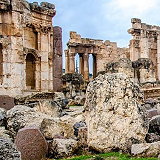
Baalbek is a city in eastern Lebanon, renowned for its impressive archaeological site filled with ancient ruins, particularly its magnificent Roman temples. Situated in the fertile Beqaa Valley, Baalbek was once a major city in antiquity and is home to one of the largest and best-preserved Roman temple complexes in the world. Its population was 82,608.
The Baalbek temple complex, located in Baalbek, Lebanon, is one of the most impressive and mysterious Roman and pre-Roman architectural monuments in the world. Baalbek was an important center for the worship of Roman gods, particularly Jupiter, Venus, and Bacchus. Its massive scale, exquisite carvings, and masterful construction techniques continue to attract admiration and fascination.
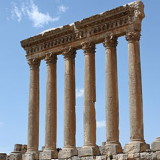
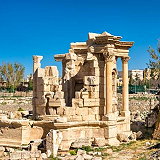
The Temple of Venus in Baalbek, Lebanon, is a stunning Roman monument located within the ancient Baalbek archaeological site, renowned for its magnificent architectural wonders. The temple reflects the skill and artistic taste of Roman architects and holds a significant place in the cultural and religious history of the region.
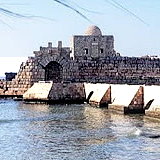
Sidon is the third largest city in Lebanon. Located on the Mediterranean coast in the Southern Province, it is the provincial capital. Sidon has a population of approximately 80,000 within its city limits. Sidon I, II, and III are prehistoric sites, with Sidon I being an archaeological mound of ancient Sidon dating from the early Bronze Age.
As Sayalah Sharq, Al Gomrok, Alexandria Governorate 5321431, Egypt
101 views 💖 1
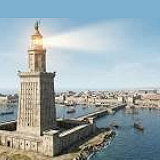
The Lighthouse of Alexandria was a lighthouse built by the Ptolemaic Kingdom of ancient Egypt on the Egyptian island of Pharos, during the reign of Ptolemy II Philadelphus (280–247 BC). It is estimated that it was at least 100 meters (330 ft) tall.
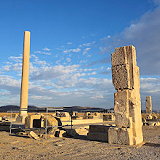
Pasargadae was the capital of the Achaemenid Empire under Cyrus the Great (559-530 BC), who ordered its construction. Today it is an archaeological site located just north of the town of Madar-e-Soleyman and about 90 kilometres (56 mi) to the northeast of the modern city of Shiraz. A limestone tomb there is believed to be that of Cyrus the Great.
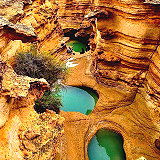
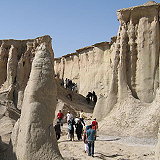
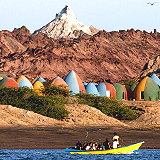
Chahkooh Gorge, also known as Chahkooh Valley or Tangeh Chahkooh, is a stunning geological wonder on the island of Qeshm in the Persian Gulf, Hormozgan province, southern Iran. Often referred to as one of the "seven wonders" of Qeshm, this majestic gorge showcases the artistry of nature through millennia of erosion.
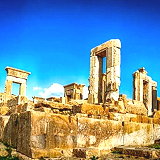
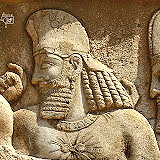
Persepolis, also known as Takht-e Jamshid, was the magnificent ceremonial capital of the Achaemenid Empire (c. 550–330 BC). Situated on the Marvdasht Plain in Iran's Fars Province, surrounded by the Zagros Mountains to the south, Persepolis holds a significant place in history and is recognized as one of Iran's key cultural heritage sites.
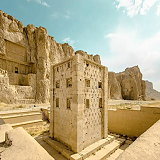
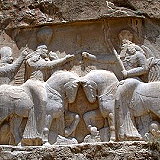
The Tomb of Xerxes I, also known as the Tomb of Darius the Great, is an ancient burial site located in Naqsh-e Rostam, Fars Province, Iran. It is believed to be the tomb of Xerxes I (Xerxes the Great), the fourth king of the Achaemenid Persian Empire, who reigned from 486 to 465 BC.
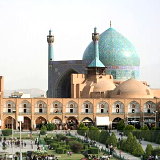
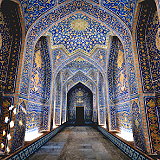
The Shah Mosque, officially known as the Imam Mosque or Imam Khomeini Mosque, is a mosque located south of Naqsh-e Jahan Square in Isfahan, Isfahan Province, Iran. Construction began in 1611, during the Safavid Empire, on the orders of Abbas the Great, and was completed around 1630. It is considered one of the masterpieces of Persian architecture during the Islamic period.
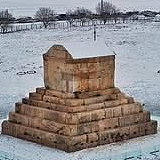
The Tomb of Cyrus the Great, located in Pasargadae in present-day Iran, is one of the most iconic architectural works of the ancient Achaemenid Empire. Built in the 6th century BC, the tomb is a solemn and sacred memorial to Cyrus II, the founder of the Persian Empire. Its simplicity and splendor reflect both royal power and profound reverence.
The Tomb of Artaxerxes of Persia is a crypt located in Marvdasht. It is part of the Naqsh-e Rostam necropolis and is the burial place of King Artaxerxes I of the Achaemenid dynasty. The tomb, carved into the side of a cliff, showcases the splendor and sophistication of Achaemenid Persian architecture.
Qeshm is an arrow-shaped Iranian island located in the Strait of Hormuz in the Persian Gulf, with a surface area of approximately 1,500 km² (576 square miles). Separated from mainland Iran by the Strait of Clarence (Khuran), Qeshm is the largest island in the Persian Gulf. The island's population was 148,993 in 2016. The island belongs to Qeshm District, Hormozgan Province.
Fars Province, historically known as Pars, Farsistan, and Persis, is one of Iran's 31 provinces. Its capital is Shiraz. The province had a population of 4,851,274 in 2016. Fars is a land of culture, poetry, and orange blossoms.
Kish is a 91.5 km² (35.3 mi²) resort island in Hormozgan province, off the southern coast of Iran in the Persian Gulf. The island includes the city of Kish. The island is promoted as a shopping paradise, with shopping malls, tourist attractions, and resort hotels. The island has an estimated population of 55,205 and receives approximately 12 million visitors annually.
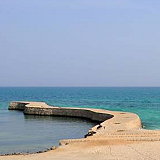
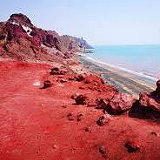
Hormuz Island is an Iranian island located in the Persian Gulf. The island covers an area of 42 km² (16 sq mi). Situated in the Strait of Hormuz, 8 km (5 mi) off the Iranian coast, it belongs to Hormozgan province. The island is sparsely populated, but some development has taken place since the late 20th century.
Upon entering Naqsh-e-Jahan Square, you will find yourself under surveillance and protection from all four sides. All edges of this rectangular square align with the four cardinal directions and are punctuated by four markets: the Imam Mosque (Shah), the Sheikh Lotfollah Mosque, the Ali Qapu Palace, and the Qeysarieh Market.
Hormozgan Province is one of Iran's 31 provinces. Its capital is Bandar Abbas. The province comprises 14 islands in the Persian Gulf and boasts 1,000 km of coastline. Its population was 1,776,415 in 2016. With its pristine beaches, vibrant culture, and valuable historical heritage, Hormozgan is a paradise for travelers seeking to explore lesser-known regions.
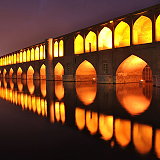
The Si-o-Se Pol Bridge, also known as the "Bridge of 33 Arches," is one of the most iconic landmarks in Isfahan, Iran. This historic bridge stretches across the Zayanderud River and was built in the early 17th century during the Safavid dynasty under the reign of Shah Abbas I. The bridge’s name, Si-o-Se Pol, translates to "33 Bridge" in Farsi, referencing its 33 magnificent stone arches.
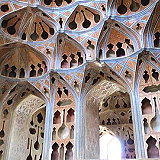
Ali Qapu is a royal palace in Isfahan, Iran. Located west of Naqsh-e Jahan Square, opposite the Sheikh Lotfollah Mosque, it was originally designed as a grand gateway leading to the magnificent palace complex that stretched from the square to Chaharbagh Avenue. Ali Qapu is considered the finest example of Safavid architecture and a symbol of Iran's Islamic heritage.
Isfahan is one of the most iconic and historic cities in the central region of Isfahan District, Isfahan Province, Iran. It is the capital of the province. The city had a population of 2,238,000 in 2025, making it the third most populous city in Iran, after Tehran and Mashhad.
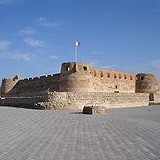
Arad Fort is a historical fortification located in the city of Arad in Bahrain. The fort is believed to have been built during the 15th century, although some sources suggest that it may date back as far as the 13th century. The fort is located on a strategic hilltop overlooking the Arabian Gulf and was built to defend against invaders and pirates.